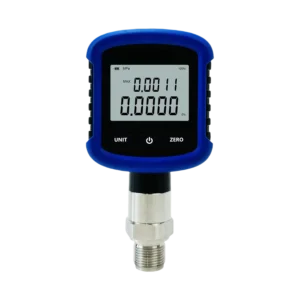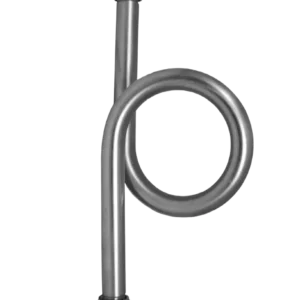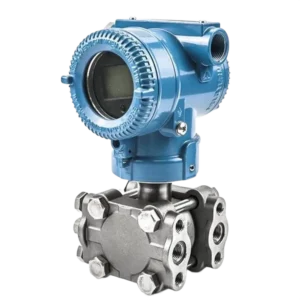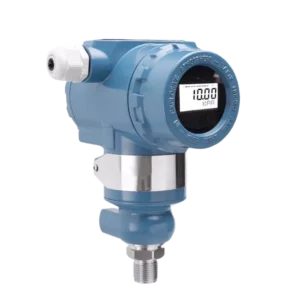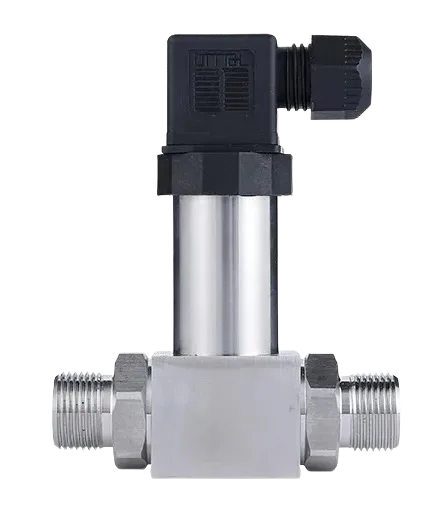

Compact Differential Pressure Transmitter
- Very compact dimensions and design, suitable for installation in confined spaces.
- Standard industrial signal output (4 to 20 mA) for communication with control systems.
- Accurate measurement of differential pressure in pipelines.
- Suitable for continuous monitoring of filter and strainer blockage.
- Cost-effective and ideal for high-volume applications or installation in OEM equipment.
- All-stainless-steel construction, resistant to industrial environments.

Engineering-Led Selection

Genuine Products, Direct Sourcing
Phone:
021-66572717Differential pressure transmitter, also known as a compact or pencil-type transmitter, is a compact device designed to measure the pressure difference between two points in a process and convert it into a standard electrical signal, such as 4 to 20 mA. This model is a smaller, more economical version of larger differential pressure transmitters and is designed for installation in confined spaces.
This transmitter operates using a sensitive sensor with two separate input ports connected to two points at different pressures (high pressure and low pressure). The applied pressure difference displaces the sensing element, and this displacement is converted into an electronic signal that sends the differential pressure directly to a display or control system (PLC/DCS).
Thanks to their small size, affordability, and ease of installation, these transmitters are an ideal choice for continuous filter monitoring in small pipelines, level measurement in low-height tanks, and use in hydraulic and pneumatic systems that require differential pressure monitoring.
| Certification | General Purpose |
|---|---|
| Display Type | Without Display |
| Fluid Type | Conductive Liquid, Gas, Non-Conductive Liquid, Steam |
| Output Signal | 4-20 mA |
| Portability | Fixed |
| Power Supply | 24V DC |
| Wetted Part Material | Stainless Steel |
| Measured Variable | Pressure |
| Process Connection | Thread |
| Measurement Technology | Differential Pressure Transmitter |
Introduction to Differential Pressure Transmitters
Submit Your Request in One Place
You can add multiple instruments to one request. The form shows the fields available for each product.
Frequently Asked Questions
It converts the pressure difference between two inputs into an electrical output. For filter monitoring, ventilation, or process applications, select a model compatible with the fluid.
Not necessarily; some sensors are designed only for dry, non-corrosive gases. Compatibility of both sides of the sensor with liquids must be explicitly confirmed in the datasheet.
The DP range is the measurable pressure difference; static pressure is the common pressure on both sides. A small differential does not mean that a high line pressure is permitted.
Connect the positive port to the higher pressure and the negative port to the lower pressure. For bidirectional applications, the model must support a bidirectional range and sign display.
No; with elements such as an orifice, the relationship between flow rate and differential pressure is usually nonlinear. The calculation depends on the element specifications, fluid, and required compensation.
Installation, temperature, static pressure, or an unbalanced liquid column can affect the zero. Check the zero according to the instructions, with equal conditions on both sides.
Provide the differential range, static pressure, fluid type on both sides, temperature, connection, output, power supply, accuracy, and installation conditions.