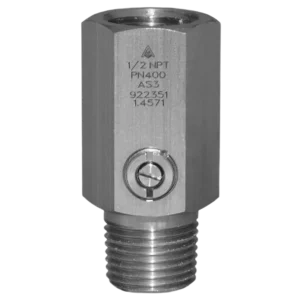
Mechanical Pressure Switch
- Simple and reliable performance for pressure control at a specified set point.
- Equipped with adjustable NO and NC contacts for electrical signaling.
- No external power supply required for switching operation.
- Highly resistant to vibration and shock thanks to its robust mechanical design.
- Set point can be adjusted at the installation site.
- Cost-effective and essential for process safety and protection.

Engineering-Led Selection

Genuine Products, Direct Sourcing
Phone:
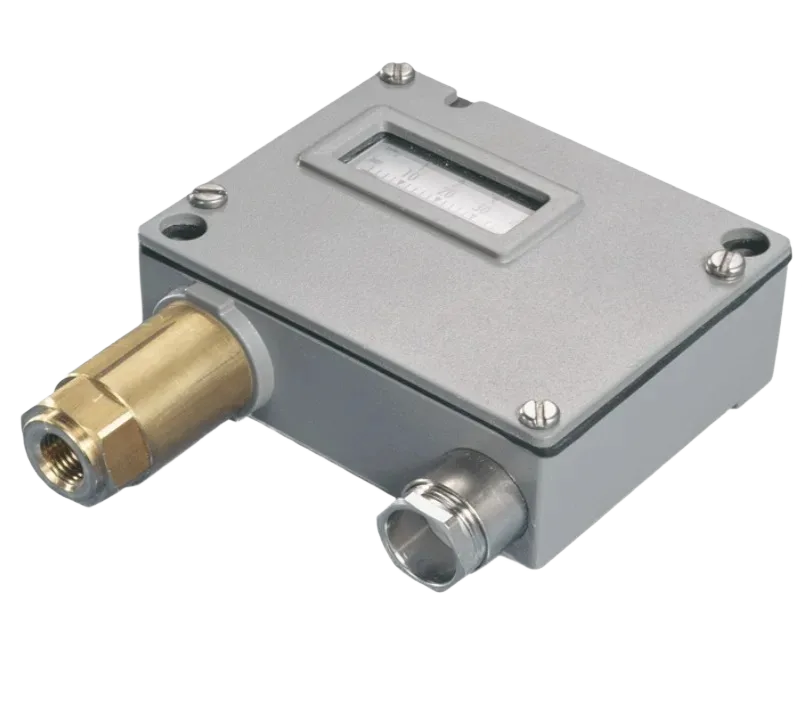
021-66572717A mechanical pressure switch is a control and safety device that sends an electrical ON/OFF signal when the pressure of a fluid (liquid or gas) reaches a preset value (Set Point). Unlike transmitters, this device does not measure the exact pressure value; it only checks the pressure status against the set point.
Mechanical pressure switches operate using mechanical mechanisms such as a diaphragm, piston, or Bourdon tube. Process pressure acts on this sensing element, and when the pressure force exceeds the force set by a calibrated spring, the element moves and activates or deactivates an internal micro switch. This switch typically has NO (Normally Open) and NC (Normally Closed) contacts.
Pressure switches are important safety devices in industry and are widely used in applications such as protecting pumps against excessive pressure, starting compressors, activating high- or low-pressure alarms, and emergency shutdown systems.
Thanks to their simple design and high durability, these devices require little maintenance and are reliable in harsh industrial environments.

| Measured Variable | Pressure |
|---|---|
| Display Type | Without Display |
| Fluid Type | Conductive Liquid, Gas, Non-Conductive Liquid, Steam |
| Installation Type | Contact, Direct Mount |
| Output Signal | Switch Output |
| Process Connection | Thread |
| Wetted Part Material | Stainless Steel |
| Portability | Fixed |
| Certification | Ex-proof, General Purpose |
| Measurement Technology | Mechanical Pressure Switch |
Submit Your Request in One Place
You can add multiple instruments to one request. The form shows the fields available for each product.
Frequently Asked Questions
When the pressure reaches the setpoint, the switch changes the contact state; a transmitter sends a continuous pressure measurement.
The sensing mechanism and contact switching usually operate without a power supply; the circuit connected to the contact requires an appropriate power source.
The activation and reset pressures are not the same. The difference between them is the deadband, which may be fixed or adjustable and should suit the control requirements.
This may be possible only if the contact load remains within its rated limits and the circuit is properly designed. For motor loads, a suitable contactor or interface is generally considered.
No. The adjustment range, maximum allowable working pressure, and withstand overpressure are separate specifications. All three must be suitable for the actual line conditions.
This cannot be assumed without reviewing the certification and circuit architecture. Safety requirements, protection type, and failure behavior must be considered during selection.
Please provide the process fluid, activation and reset points, maximum pressure, temperature, connection, wetted-part materials, contact type and rating, and ambient conditions.