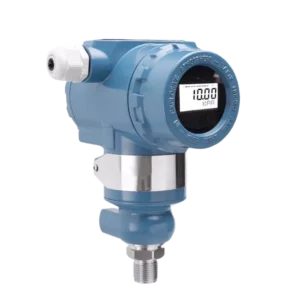
Pressure Gauge Syphon
- Protects pressure sensors from extremely high process fluid temperatures, especially steam.
- Forms a dense liquid barrier (Condensate Barrier) to prevent direct contact between hot steam and the sensor.
- Acts as a pulsation reducer and shock dampener (Dampener) to extend instrument service life.
- Provides a simple, direct connection between the process line and the measuring instrument.
- All-stainless-steel construction for high resistance to corrosion and pressure.
- Requires no external power supply or periodic maintenance.

Engineering-Led Selection

Genuine Products, Direct Sourcing
Phone:
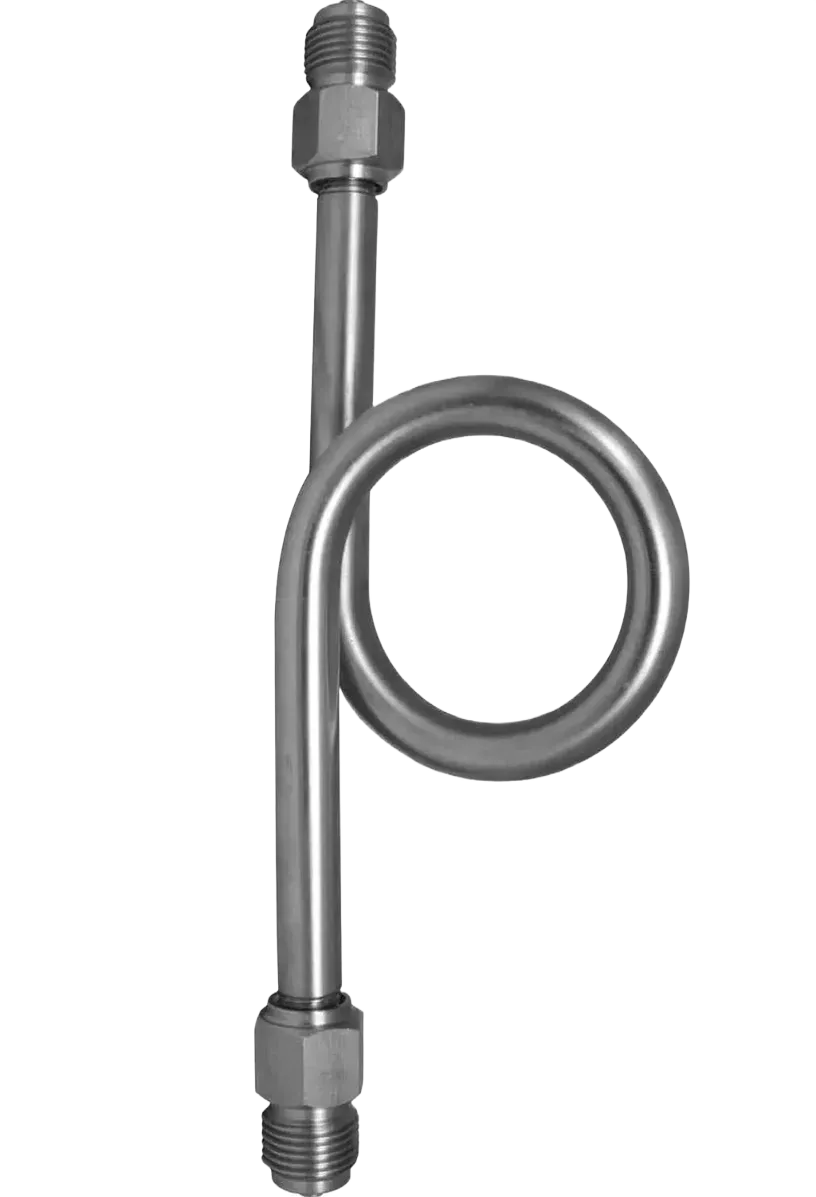
021-66572717A siphon or pigtail is a curved, coiled pipe installed between the process connection point and a pressure measuring instrument, such as a gauge, switch, or transmitter.
A siphon is not a control device; it is a simple but important mechanical protection component. Its primary function is to protect pressure sensors from excessively high temperatures in steam lines.
- Temperature protection: When a hot fluid, such as steam, enters the siphon, its curved shape causes the fluid to condense inside the loop, forming a column of cool liquid (Condensate). This liquid column acts as a thermal barrier, preventing the process fluid’s extremely high temperature from reaching the diaphragm or sensitive sensor of the measuring instrument and protecting its internal components from damage or burnout.
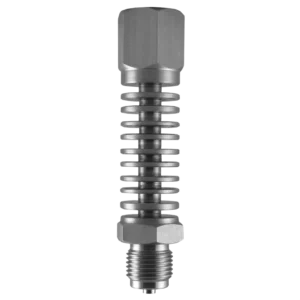
- Pressure pulsation protection: To reduce pressure pulsations and fluctuations, use a suitable snubber or damper. A siphon primarily provides thermal protection and is not a substitute for these devices.
Siphons are used in steam boilers, steam lines, and other lines carrying hot fluids.

| Measured Variable | Pressure |
|---|---|
| Fluid Type | Conductive Liquid, Gas, Non-Conductive Liquid, Steam |
| Installation Type | In-line |
| Process Connection | Thread |
| Wetted Part Material | Stainless Steel |
| Portability | Fixed |
| Measurement Technology | Pressure Accessories |
Submit Your Request in One Place
You can add multiple instruments to one request. The form shows the fields available for each product.
Frequently Asked Questions
In steam lines, it helps reduce the temperature at the pressure instrument inlet by retaining a separating liquid. The siphon itself must also be suitable for the pressure and temperature.
No. A siphon’s primary function is thermal protection. To dampen pulsations, a snubber or damper suitable for the operating conditions should be considered.
According to the manufacturer’s instructions, it is usually filled with water or a compatible separating liquid. Dry startup can expose the instrument to hot steam.
The installation arrangement, connection orientation, and available space all matter. The shape and orientation must allow the separating liquid to form and remain as intended by the design.
No. The material, wall thickness, and connections have operating limits. The design pressure and temperature must be checked for the siphon and all components in the assembly.
Blockage, leakage, or an abnormal change in instrument response indicates that it should be inspected. Disassembly and servicing should only be performed after isolation, depressurization, and safe cooling.
Provide the steam pressure and temperature, material, thread type and size, shape and installation orientation, instrument type, and installation space constraints.