
Flow Meter Response Time and the Effect of Damping on Flow Measurement

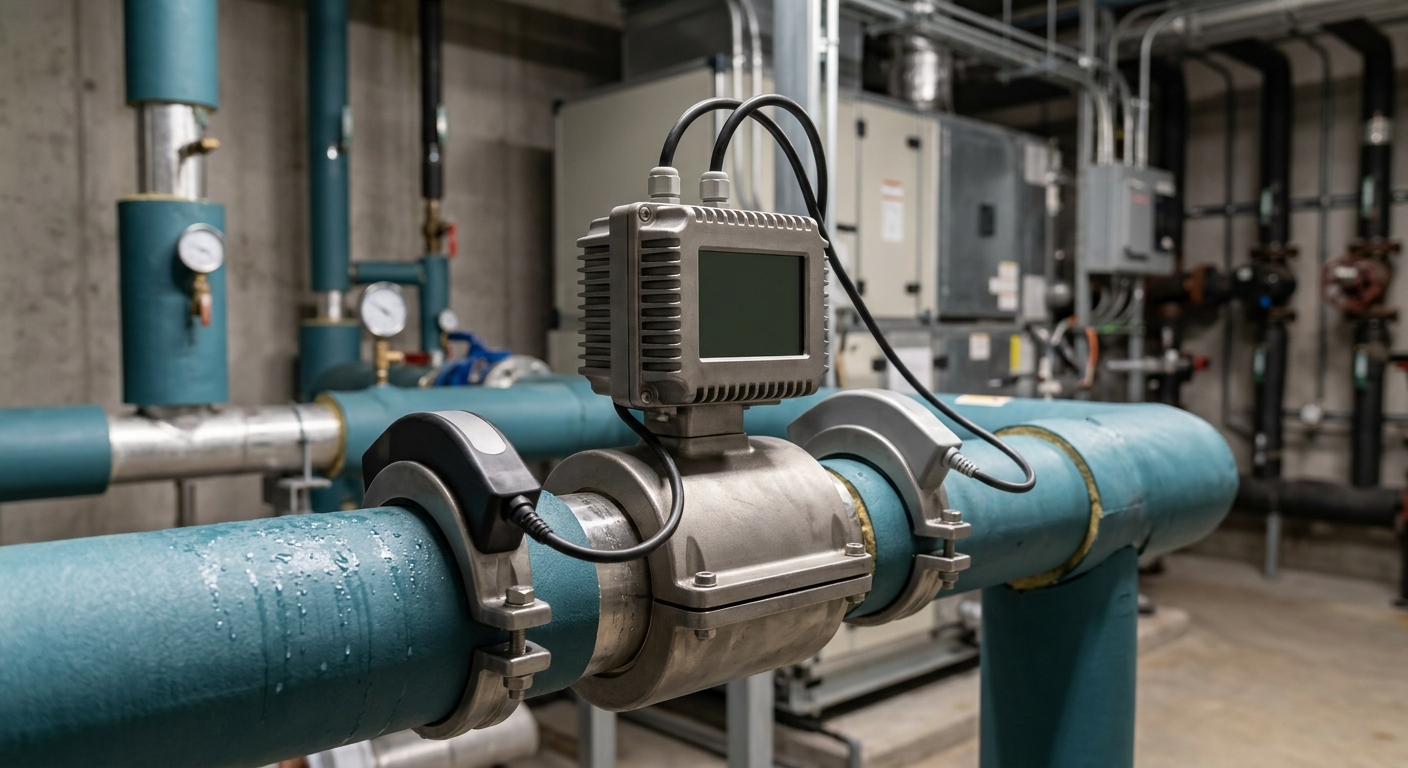
Suppose the flow rate in a line changes from 20 to 80 m³/h. Should the flow meter display show the new value immediately? Usually not. There is a time-dependent behavior between the actual change in flow and the value shown on the display or distributed control system (DCS). Understanding this behavior helps you select and configure a flow meter to suit process requirements.
Two key concepts in this area are Response Time and Damping / Filtering. These concepts are related but not the same: response time describes how quickly the measurement reacts, while damping is a method of smoothing and stabilizing the output.
What Is Flow Meter Response Time?
Response time indicates how quickly a device’s output approaches a change in its actual input. If the flow rate changes in a step from one value to another, the output typically moves gradually toward the new value rather than jumping instantly from 20 to 80. The time it takes the output to reach a portion of its final value, such as 90% or 99%, is one way to describe this behavior.
To interpret this specification, check the definition provided in the technical documentation for the specific device, as the way response time is stated and the conditions under which it is measured can vary. The value we ultimately observe may also be affected by several stages: the physical measurement process, sampling, signal processing, internal filters, and transmission of the output to the display or DCS. Therefore, the sensor’s response speed alone does not tell the whole story.
How Does Measurement Technology Affect Response?
Each technology uses a different method to convert flow into a signal. As a result, the physical components and internal processing of each flow meter can produce different transient behavior.
- Magnetic flow meter: Since there are no moving parts in the measurement path, its baseline response can be fast. However, field excitation rate, signal processing, and digital filters affect the final output.
- Turbine flow meter: The rotor must accelerate or decelerate to follow changes in flow rate. Rotor inertia, bearing friction, and flow conditions all influence its behavior during transient changes.
- Positive displacement flow meter: Movement of internal components, friction, fluid viscosity, and mechanical clearances are among the factors that can affect dynamic response.
- Vortex flow meter: Vortex formation and detection, along with frequency processing, affect the device’s response; this is especially important at low flow rates.
- Ultrasonic flow meter: The measurement algorithm, number of samples, and data averaging or filtering affect output behavior. More averaging can reduce fluctuations but may slow the response.
- Thermal mass flow meter: The sensor’s thermal time constant is important. Low-mass sensors, including MEMS-based models, typically have the potential for a faster response.
- Coriolis flow meter: The mechanical behavior of the vibrating tube, processing of phase and frequency changes, and damping settings affect the output response speed.
These differences do not mean that one technology is best for every application. Selection should be based on the fluid type, process conditions, control requirements, and device specifications.
Damping: Balancing Speed and Stability
Damping is used to reduce fluctuations and smooth the output signal. With a low damping setting, the output follows changes more quickly, but noise or flow fluctuations may be more apparent on the display and in the signal. Increasing damping makes the output appear more stable, but the actual change in flow rate is displayed with a longer delay.
Choosing the right setting is therefore a compromise between faster response and a more stable signal. The lowest damping setting is not always the best choice. If the signal fluctuates significantly, the operator or control system may have difficulty interpreting the flow rate. On the other hand, excessive damping can slow the response to important changes. It is also important to determine whether the filter is configured in the flow meter itself or whether some of the processing is performed in the display, controller, or DCS.
Selection and Installation for the Application
Before selecting a flow meter, clarify its intended use and how quickly flow changes need to be detected. For consumption monitoring, a delay of a few moments may have little effect on decision-making. In a fast control loop, short batch process, or dosing application, however, a delay can affect timing and overall process performance.
When reviewing technical documentation, check the response time specification and damping adjustment options in addition to accuracy and rangeability. Compare the test conditions and definition of response time with your actual application, and ask the vendor or manufacturer about output behavior at the settings you intend to use. Also weigh the required response against the need for signal stability; choosing solely on the basis of the fastest possible output does not always deliver the desired result.
Proper installation is also important for achieving reliable measurements. Install the flow meter according to the device-specific instructions, taking into account the technology, line configuration, and flow conditions. Vibration, turbulence, or unstable flow can affect the measurement signal and may be mistaken for the device’s inherent delay. After installation, comparing output behavior with actual process changes and adjusting damping under operating conditions can help achieve the right balance.
Summary
A flow meter converts changes in flow into a displayable signal through sensing and processing, so the output does not necessarily change at the same time as the process. Response time and damping determine how quickly the change appears and how much fluctuation is visible. When selecting a meter, look beyond accuracy and rangeability and consider the process’s actual need for speed or stability. The key question is not how fast the flow meter is, but how fast it needs to be for your application.
Consultation and Price Inquiry
To select the right equipment for your project or request a price quote, contact the Abzar Tamin Arshia team through the price inquiry form.