
Choosing a Flow Meter for Low Flow Rates: Key Considerations

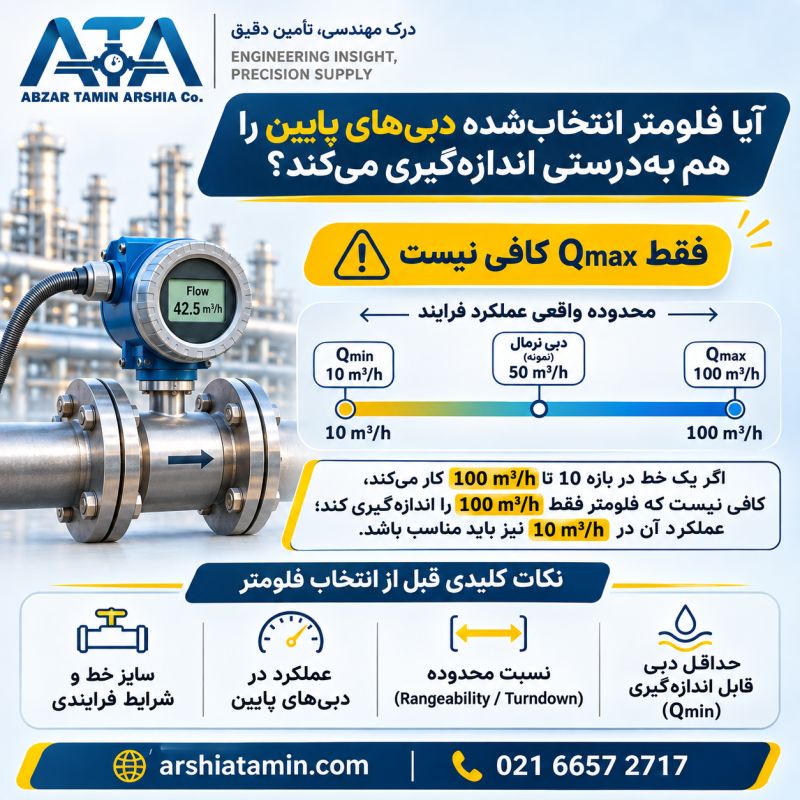
When selecting a flow meter, it is natural to focus on the line’s maximum flow rate. However, this specification alone does not show whether the instrument will provide acceptable measurement across all operating conditions. In many processes, fluid flow varies over time, and the line may operate sometimes near its maximum flow rate and at other times at a much lower rate. If the flow meter cannot provide a stable signal that corresponds to the flow at low rates, some of the information required for the process may be lost—even if the instrument’s rated capacity matches the line’s maximum flow rate.
Suppose the flow rate in a line varies from 10 to 100 cubic meters per hour. Selecting a flow meter that can measure 100 cubic meters per hour solves only part of the problem. You also need to determine whether a flow rate of 10 cubic meters per hour falls within the model’s measurable range and whether the instrument performs adequately at that point for the process requirements. To answer this, you need to assess the minimum flow rate, rangeability, and actual operating conditions together.
What Do Qmin and Rangeability Mean?
Qmin refers to the minimum flow rate that a flow meter can measure. It indicates the lowest point at which the instrument can measure flow according to its specifications. However, a process flow rate near the stated minimum does not necessarily mean the instrument will perform as it does at higher flow rates. In addition to the minimum flow rate itself, buyers should review the instrument’s performance specifications in that range.
Rangeability, or Turndown, is the ratio between the maximum and minimum measurable flow rates within a defined range. For example, a ratio of 100:1 nominally means that the maximum flow rate is 100 times the minimum flow rate. However, this figure should not be treated as the sole criterion for selection. Its practical meaning depends on the conditions specified by the manufacturer for that particular model and size, including the fluid type and the range over which the measurement specifications are valid.
For this reason, instead of simply asking what “range” a flow meter has, also ask: What is the minimum measurable flow rate or velocity? How is performance at low flow rates specified? Does the stated range apply to the size you need? And do the specifications match the actual process conditions? The answers provide a more accurate picture of the instrument’s performance.
Why Does Flow Meter Technology Matter at Low Flow Rates?
Not all flow meters detect flow in the same way. As a result, the limiting factor at low flow rates can vary depending on the measurement technology. When comparing models, do not apply a ratio or minimum flow rate to other flow meters without considering the instrument type and application conditions.
- Magnetic flow meter: Low fluid velocity can limit measurement performance. Therefore, compare the velocity corresponding to the required minimum flow rate at the selected size with the model’s technical specifications.
- Turbine flow meter: At low flow rates, the flow may not be sufficient to keep the rotor moving steadily. In this type of application, it is especially important to review the instrument’s performance in the lower range.
- Vortex flow meter: A decrease in flow rate can lower the Reynolds number, potentially limiting the measurement range. The model’s suitability should be assessed based on the process conditions and the specifications of that particular instrument.
- Thermal mass flow meter: Check the model’s specifications to verify its measurement range and stability at low flow rates. The fluid type and application conditions are also essential information for the assessment.
- Ultrasonic flow meter: The flow velocity range and installation conditions can affect performance at low flow rates. Therefore, selecting a meter based on line size alone is not sufficient.
These points are an initial guide to asking the right questions, not a substitute for reviewing the technical specifications. Even within the same technology category, different models and sizes can have different operating ranges. To make a decision, consider information about the selected model alongside the actual installation conditions.
Assess Line Size and the Actual Flow Range Together
The nominal line size alone does not indicate whether a flow meter is suitable for all flow rates in the line. If selection is based only on pipe diameter and maximum flow rate, the fluid velocity or measurement signal may be insufficient for the expected performance at low flow rates. On the other hand, assessing the meter only based on the minimum flow rate ignores the process requirements at maximum operating conditions.
For a more precise selection, describe the line’s operating range using three values: minimum, normal, and maximum flow rate. The normal flow rate is important because it usually represents typical operating conditions, while the minimum and maximum define the required limits. Then check whether these points fall within the flow meter’s measurement range and whether the stated performance at each point meets the application requirements.
You should also provide the supplier or manufacturer with the process conditions. Fluid type, pressure, and temperature can all play a role in assessing which model is suitable. If flow is expressed in volumetric units, clarifying the conditions on which the reported flow rate is based can also help avoid ambiguity during the assessment. The more complete the input information, the more accurately the options can be compared.
Installation and Commissioning Considerations for Reliable Performance
Proper selection is not complete without considering installation. The installation location, flow conditions, and requirements associated with the flow meter technology can all affect measurement quality. Before ordering, review the installation instructions for the model to identify its specific requirements and limitations. Do not assume that the installation requirements for one type of flow meter also apply to other technologies.
When designing or reviewing an installation, consider the flow direction, whether the pipe will be full or empty at the measurement location, and the conditions required for stable flow. Turbulence or unsuitable flow conditions at the installation point can cause results to differ from expected performance. Obtain the required piping layout and instrument location from the manufacturer’s documentation for that model, since installation recommendations may depend on the flow meter type and system configuration.
During commissioning, comparing the flow meter reading with actual process conditions and checking the signal at different flow rates can help identify problems early. If the line operates at low flow rates during some parts of its operating cycle, do not evaluate the instrument only under high-flow conditions. Performance at key points across the operating range should be checked against operational requirements and the stated specifications.
What Information Should You Prepare When Selecting a Flow Meter?
To receive a suitable recommendation, provide the following information as accurately as possible, including the units of measurement:
- Fluid type and any available information that helps characterize its properties;
- Required minimum, normal, and maximum flow rates;
- Line size and information about the installation location;
- Operating pressure and temperature;
- Measurement purpose and operating conditions;
- Installation limitations or specific process characteristics.
Having this information makes it possible to assess capacity, minimum flow rate, operating range, and application conditions together. At Abzar Tamin Arshia, when recommending a flow meter, we review the actual flow range and process conditions alongside the performance specifications of the proposed model, so that the selection is not based solely on line size or maximum flow rate.
Summary
A flow meter that measures a line’s maximum flow rate is not necessarily a suitable choice for low flow rates in the same line. The minimum measurable flow rate, rangeability, instrument technology, selected size, and installation conditions all play a role in the assessment. Therefore, specify the full flow range—including minimum, normal, and maximum—and evaluate the model’s performance under actual process conditions. To assess and select a suitable flow meter, share your application details and operating conditions with Abzar Tamin Arshia.
Consultation and Price Inquiry
To select the right instrument for your project or request a price quote, contact the Abzar Tamin Arshia team via the price inquiry form.