
Why Doesn’t a Flow Meter’s Measurement Range Start at Zero?

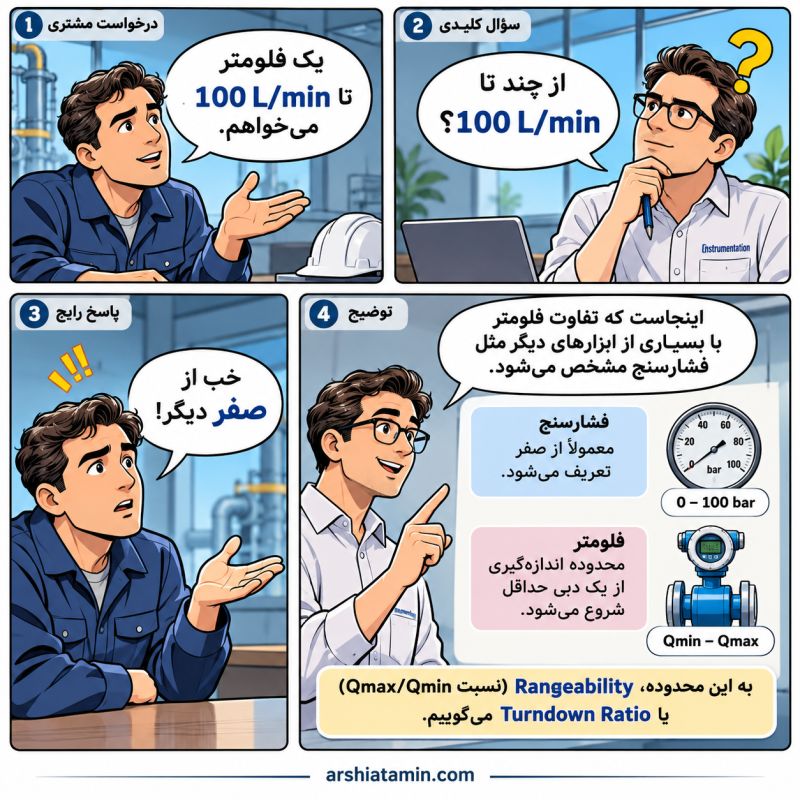
In many measuring instruments, the operating range is expressed from zero to a maximum value. For example, a pressure gauge or temperature sensor may have a range that starts at zero. However, flow meter specifications usually list two values, Qmin and Qmax: the minimum and maximum flow rates the instrument is designed to measure. This difference raises an important question: Why doesn’t a flow meter’s range start at zero, and what does this mean when selecting equipment?
The short answer is that measuring very low flow rates is not always possible with the same performance and specifications expected within the defined operating range. Therefore, Qmin is not merely a nominal value; it is a limit that must be evaluated in relation to the flow meter type, fluid, process conditions, and the manufacturer’s definition.
What Do Qmin and Qmax Indicate?
Qmax is the highest flow rate at which the flow meter is designed to operate within its defined range. At the other end, Qmin is the lowest flow rate at which measurement can be relied upon to meet the specifications stated for the instrument. Below this limit, the device may still display a reading, but you cannot automatically assume that the value has been obtained with the same performance or stated error.
For this reason, a flow meter’s usable range is usually expressed as Qmin to Qmax, rather than zero to Qmax. As the flow rate approaches very low values, the measurement signal or the instrument’s ability to detect and distinguish changes in flow may be affected. How this limitation manifests depends on the measurement technology and application conditions; therefore, a single explanation cannot be applied to all flow meter types.
For buyers and process engineers, the practical point is to compare Qmin with the lowest actual flow rate expected in the line. If the process operates at a flow rate below this value at certain times, it should be clarified whether measurement is required under those conditions and what performance the manufacturer guarantees or defines for that range.
How Should You Interpret Rangeability and Turndown Ratio?
Rangeability is generally the ratio of the maximum flow rate to the minimum measurable flow rate within the defined range, expressed as Qmax/Qmin. This ratio indicates the breadth of the flow meter’s operating range in terms of flow rate. For example, a ratio of 100:1 is cited in the main post as an example of a specification; however, without knowing the conditions under which the range is defined, this figure alone does not provide a complete picture of the instrument’s performance.
Turndown Ratio is also used in many catalogs to describe a closely related or nearly identical concept. However, the terms are not used consistently in all sources. Some explanations use Turndown to refer to the range required by the process and Rangeability to refer to the capability of the instrument itself. Therefore, rather than relying on the term alone, it is best to check the definition provided in the datasheet and the conditions under which the ratio is valid.
A high ratio alone does not mean that the flow meter can measure from the minimum to the maximum flow rate under all line conditions. The ratio is useful for selection only when the fluid type, operating conditions, and performance specifications it applies to are known. You should also check whether the process’s required range actually falls within the instrument’s permitted range.
Why Is the Specified Range Not Always Available in the Actual Line?
A flow meter’s operating range is related to installation and line design conditions. The instrument itself may be capable of measuring a range of velocities or flow rates, but the pipe size and process conditions may make some of that range unsuitable for use. For example, in a magnetic flow meter, line application constraints may make very high or very low velocities unsuitable. As a result, the flow meter’s stated Rangeability should not be assumed to be the usable range for the project without considering line conditions.
When selecting a magnetic flow meter, in addition to Qmin and Qmax, the instrument’s compatibility with the fluid and actual flow conditions must be evaluated. Items to assess using the manufacturer’s documentation and process design include fluid properties, whether the pipe is full at the measurement point, and how the instrument is installed and connected. A flow meter’s suitability for a specific line cannot be determined from its Rangeability ratio alone.
The range of gas turbine flow meters also requires careful interpretation. In some standards and datasheets, the Qmin-to-Qmax range is divided into sections, and the permissible error limits in the lower and upper sections are not the same. Gas pressure can also affect the operating range. Therefore, when reviewing a technical proposal, confirm the conditions under which the specified range and error limits are defined, and whether those conditions match the operating conditions.
What Should You Check When Selecting a Flow Meter?
The right selection starts with understanding the actual range of flow-rate variation, not choosing the highest Rangeability available in the catalog. Process data should cover different operating conditions as fully as possible, including the lowest, typical, and highest expected flow rates. If only the typical flow rate is recorded, startup conditions, load changes, or operation at low flow rates may be overlooked.
- Compare Qmin with the lowest actual flow rate: Check that the process’s minimum flow falls within the range the manufacturer defines for measurement to the required specifications.
- Review the conditions specified for the range: Match the fluid type and operating conditions listed in the datasheet to your application. For gas, include operating pressure in this assessment.
- Check the error limits across the entire range: If the datasheet divides the range into several sections, identify which section your process operates in and what specifications are stated for it.
- Assess compatibility with the pipe size and line conditions: The usable range must suit the pipe and actual flow conditions; a high ratio alone does not guarantee suitability.
- Confirm the manufacturer’s definitions of the terms: Check the meaning of Rangeability and Turndown Ratio, and how they are calculated, in the technical documentation or with the supplier.
During installation, the instructions for the specific instrument should also be followed. Flow meter location, pipe conditions, and flow conditions at the installation point can affect the measurement result. Therefore, complying with the manufacturer’s installation requirements and checking actual line conditions are part of ensuring the expected performance. If the process varies across a wide range, the assessment should cover the entire required range, not just one operating point.
Summary: A Higher Number Is Not Always the Better Choice
The measurement range of a flow meter typically starts at Qmin, since below this value, the instrument cannot be expected to maintain its specified performance. Rangeability and Turndown Ratio are useful for describing the operating span, but their precise meanings and the conditions under which they apply should be verified in the manufacturer’s documentation. More important than an impressive catalog figure is ensuring that the flow meter’s usable range matches the actual minimum and maximum flow rates, fluid type, pressure in gas applications, line size, and installation method. This review helps ensure the final selection is based on process requirements rather than simply a nominal ratio.
Consultation and Price Inquiry
To select the right instrument for your project or request a price quote, contact the Abzar Tamin Arshia instrumentation specialists through the price inquiry form.