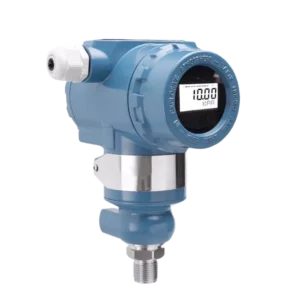
Digital Pressure Gauge
- Ability to select the appropriate accuracy class; digital operation alone does not guarantee higher accuracy.
- High-resolution digital pressure display for easy reading.
- Ability to convert and display pressure in multiple engineering units.
- Additional functions such as peak value hold (Peak Hold) and data logging.
- Suitable for on-site pressure calibration and testing.
- No moving parts, long service life, and good resistance to vibration.

Engineering-Led Selection

Genuine Products, Direct Sourcing
Phone:
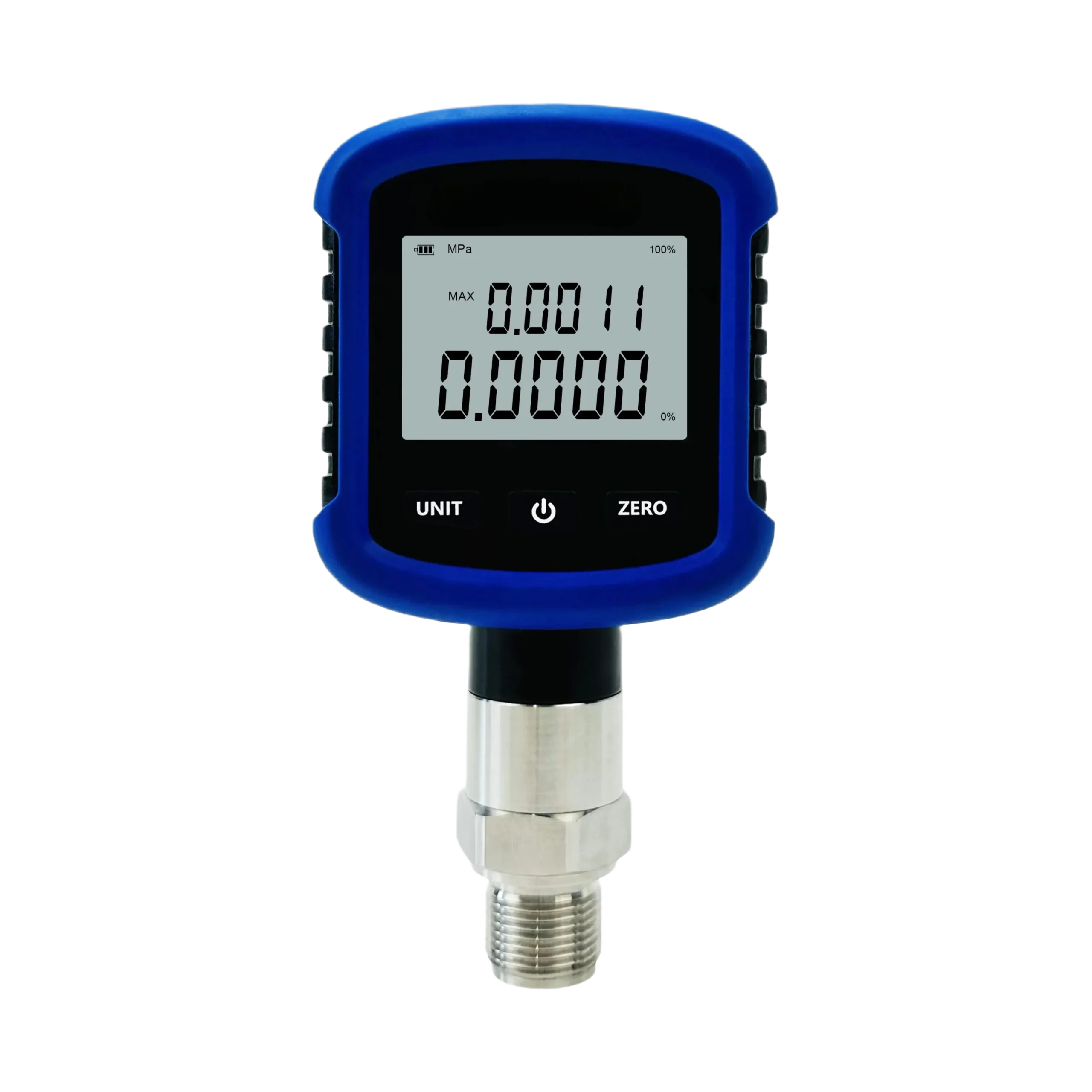
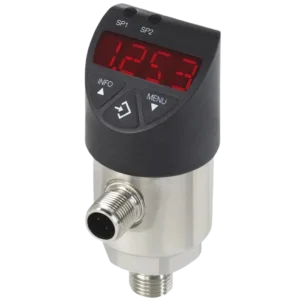
021-66572717A digital pressure gauge is a precise electronic instrument that replaces mechanical analog pressure gauges. It measures the pressure of fluids (liquids or gases) and displays the exact reading on a liquid crystal display (LCD).
The core component of the device is a pressure sensor or built-in transmitter that converts changes in pressure into an electrical signal. The main advantages of digital pressure gauges are easier readability, higher accuracy in precision models, and additional features beyond simple measurement. These devices can typically display pressure in different units, such as Bar, PSI, MPa, and more. Some models also offer features such as zeroing, peak pressure measurement (Peak Hold), and data storage.
Digital pressure gauges are often battery-powered and are used in industries such as equipment calibration, pipeline pressure testing, and sensitive pharmaceutical and food processes where accuracy, repeatability, and data logging are essential. Some models also provide an analog output for connection to control systems.

| Measured Variable | Pressure |
|---|---|
| Measurement Technology | Digital Pressure Gauge |
| Display Type | Digital, With Display |
| Fluid Type | Conductive Liquid, Gas, Non-Conductive Liquid |
| Accuracy Class | ±0.25%, ±0.5% |
| Power Supply | Battery |
| Process Connection | Thread |
| Wetted Part Material | Stainless Steel |
| Portability | Fixed, Portable |
- PDF Data Sheet EN 837 KB Download
Submit Your Request in One Place
You can add multiple instruments to one request. The form shows the fields available for each product.
Frequently Asked Questions
No; accuracy depends on the model specifications and operating conditions. A higher digit count or resolution alone does not mean greater measurement accuracy.
Resolution is the smallest change that can be displayed; accuracy refers to the permissible measurement error. Both should be matched to the measurement requirements.
Changing the unit internally does not, by itself, constitute a new calibration. The unit setting and the instrument’s accuracy limitations should still be checked.
It is used to set the zero according to the model’s instructions. Zeroing at an unsuitable pressure can cause errors and does not replace multipoint calibration.
No; local display, data logging, and electrical output are separate features. The battery or external power supply and data transfer method should be specified when ordering.
Accuracy and uncertainty, stability, range, and a valid calibration certificate are important. Being digital alone does not make an instrument a suitable reference.
Please specify the pressure type and range, required accuracy, process fluid, connection, temperature, power supply, data logging or output requirements, and certificate requirements.