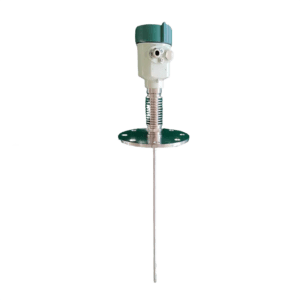
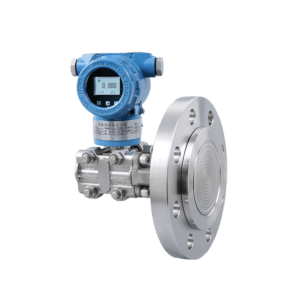
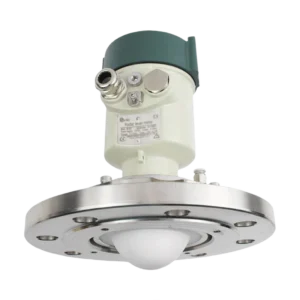
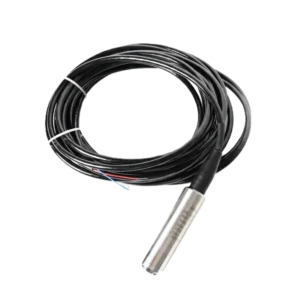
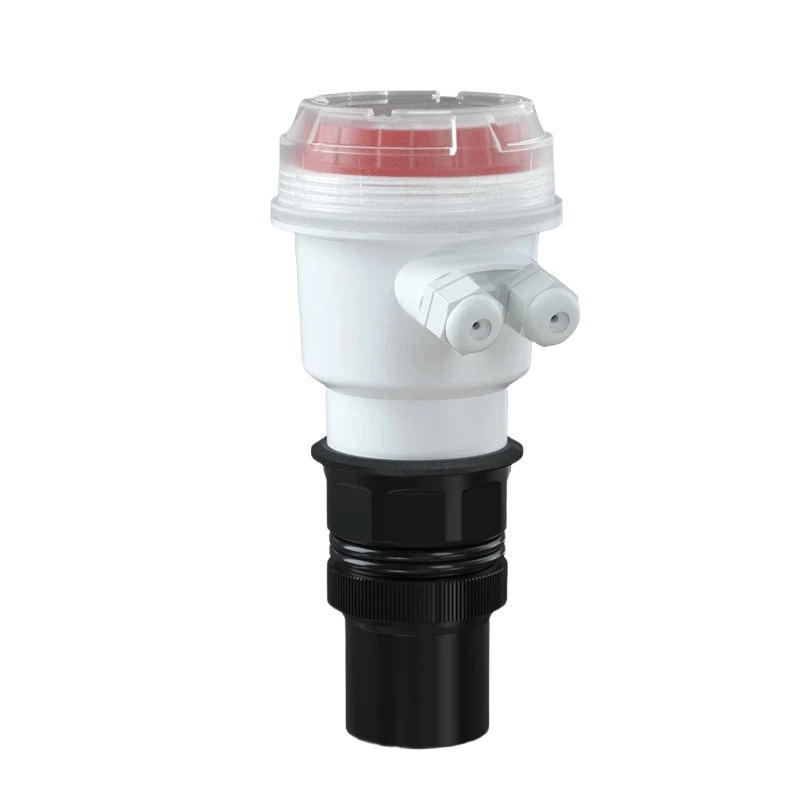
Ultrasonic Level Transmitter

  • Non-contact level measurement, suitable for corrosive and sticky liquids.
  • Easy installation and maintenance, with no need to open or drill the bottom of the tank.
  • Ideal for water and wastewater, chemical, and storage tank applications.
  • Standard 4 to 20 mA signal output for connection to control systems.
  • Level measurement in tanks and open channels (for flow measurement).
  • No moving parts and a long service life.

Engineering-Led Selection

Genuine Products, Direct Sourcing

×

Phone:

021-66572717
Product Overview

An ultrasonic level transmitter is a non-contact measuring instrument used to determine the level of liquids and, in some cases, bulk solids in tanks, silos, and open channels.

Operating principle: The device sends a high-frequency sound pulse (ultrasonic) through a transducer toward the process material’s surface. The pulse hits the surface and is reflected back to the transducer. The transmitter measures the pulse’s round-trip time (Time of Flight – TOF) and, knowing the speed of sound in the medium (gas or air), calculates the distance between the sensor and the liquid surface. Subtracting this distance from the total tank height gives the liquid level, which is converted into a standard 4 to 20 mA signal.

Because ultrasonic transmitters do not come into contact with the liquid, they are ideal for applications involving corrosive, sticky, or highly viscous liquids, such as water and wastewater, chemicals, and liquid storage.

It is important to note that the performance of these devices can be affected by changes in temperature and pressure, as well as the presence of foam or heavy vapor in the space above the liquid.

Key Features
Measured Variable
Measurement Technology
Fluid Type
Installation Type
Display Type
Output Signal
Power Supply
Process Connection
IP Rating
Request a Quote
Technical & Commercial RFQ

Submit Your Request in One Place

You can add multiple instruments to one request. The form shows the fields available for each product.

ATA SMART RFQ Engineering Insight, Precision Supply
۱

Contact Information

We will send the quotation response to this contact.

۲

Select and Add a Product

Search for a product or select one from the list to add its form.

Standard specifications will be listed in the quotation. You can request changes after receiving it.

۳

Attachments and Notes

Attach at least one file when choosing Upload RFQ Files Only.

Choose FilesPDF, Word, Excel, image, DWG or DXF — up to 10 MB per file
    ۰ قلم تجهیزAll items and files will share one tracking number.

    Frequently Asked Questions

    It converts the sound wave’s round-trip travel time to the surface into a distance. The level is calculated using the tank’s reference height, so configuring the dimensions and reference point is important.

    Near the sensor, part of the measurement path cannot be measured reliably. The maximum liquid level must remain outside the manufacturer’s specified dead zone.

    They can weaken the wave or alter the sound path. Foam intensity, vapor, and the composition of the space above the liquid should be assessed when selecting the technology.

    Yes. The speed of sound depends on ambient conditions. Temperature compensation and thermal gradients should be assessed within the model’s actual operating range.

    Nozzles, tank walls, agitators, and inlet flow may cause unwanted reflections. The beam angle and unobstructed path to the surface should comply with the installation instructions.

    On models or systems with a linearization function, the level can be converted to volume. This conversion depends on the tank’s actual shape and dimensions and on the configuration of the table or equation.

    Provide the material, tank height and shape, minimum and maximum levels, foam and vapor conditions, pressure and temperature, nozzle, obstacles, and required output.