
Applications of Magnetic Flow Meters in Industry

Introduction
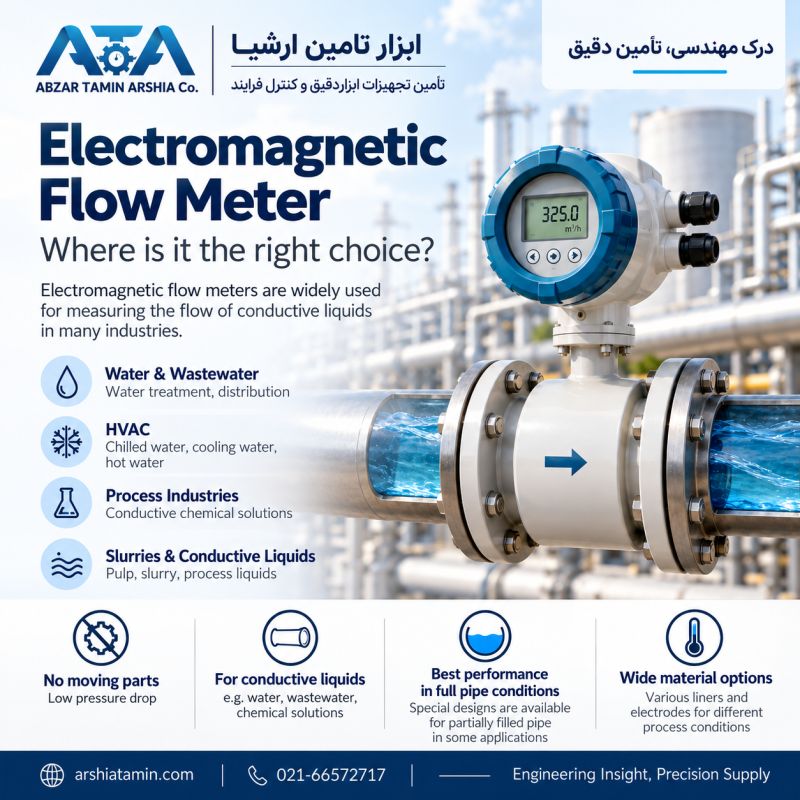
Electromagnetic flowmeters are recognized as precision instruments for measuring liquid flow. They are particularly widely used in industries that handle conductive liquids. However, this technology should be selected based on the specific process conditions and the properties of the liquid. This article explores the applications and benefits of electromagnetic flowmeters, along with key selection and installation considerations.
How Electromagnetic Flowmeters Work
An electromagnetic flowmeter operates on the principle of electromagnetic induction. When a conductive liquid passes through a magnetic field, an induced voltage is generated. Measuring this voltage makes it possible to calculate the liquid flow rate. This makes electromagnetic flowmeters suitable for liquids with high electrical conductivity.
Suitable Conditions for Using an Electromagnetic Flowmeter
- Liquid electrical conductivity: Liquids such as water, wastewater, and conductive chemical solutions are well suited to these flowmeters. However, this technology is not suitable for non-conductive fluids such as gases and oils with low conductivity.
- Full measuring tube: For proper operation, the flowmeter tube must be completely full of liquid. Partially full flow can result in measurement errors.
- No moving parts: One advantage of electromagnetic flowmeters is that they have no moving parts, which reduces pressure loss and makes them suitable for water lines and process fluid applications.
- Choosing the right liner and electrodes: For corrosive or abrasive fluids, selecting suitable liner and electrode materials is critical; choosing the right size alone is not enough.
Common Applications of Electromagnetic Flowmeters
Electromagnetic flowmeters are used in a wide range of industries. Common applications include:
- Hot and chilled water
- Water and wastewater
- Process water
- Conductive chemical solutions
- Fluids in the food and pharmaceutical industries
Electromagnetic Flowmeter Selection and Installation Considerations
When selecting and installing an electromagnetic flowmeter, the following points can help improve performance and measurement accuracy:
- Check the liquid’s electrical conductivity: Make sure the liquid has sufficient electrical conductivity.
- Consider the flowmeter design and model: Choose the right model for the fluid and application.
- Install it correctly: Make sure the flowmeter is installed properly and that the measuring tube is completely full of liquid.
Summary
An electromagnetic flowmeter is a key instrument for measuring the flow of conductive liquids. Selecting the right flowmeter based on the process requirements and specific conditions can help improve efficiency and measurement accuracy across a range of industries. For more information and advice on selecting and sourcing electromagnetic flowmeters, contact our experts at Abzar Tamin Arshia.
Read more:
In-Line Electromagnetic Flowmeter
Low-Flow Electromagnetic Flowmeter
Insertion Electromagnetic Flowmeter
Consultation and Price Inquiry
To choose the right equipment for your project or request a quotation, contact the Abzar Tamin Arshia team through our price inquiry form.