
PT100 Sensor Converter and Transmitter (Head-Mount and Rail-Mount); Comparing 2-, 3-, and 4-Wire Connections

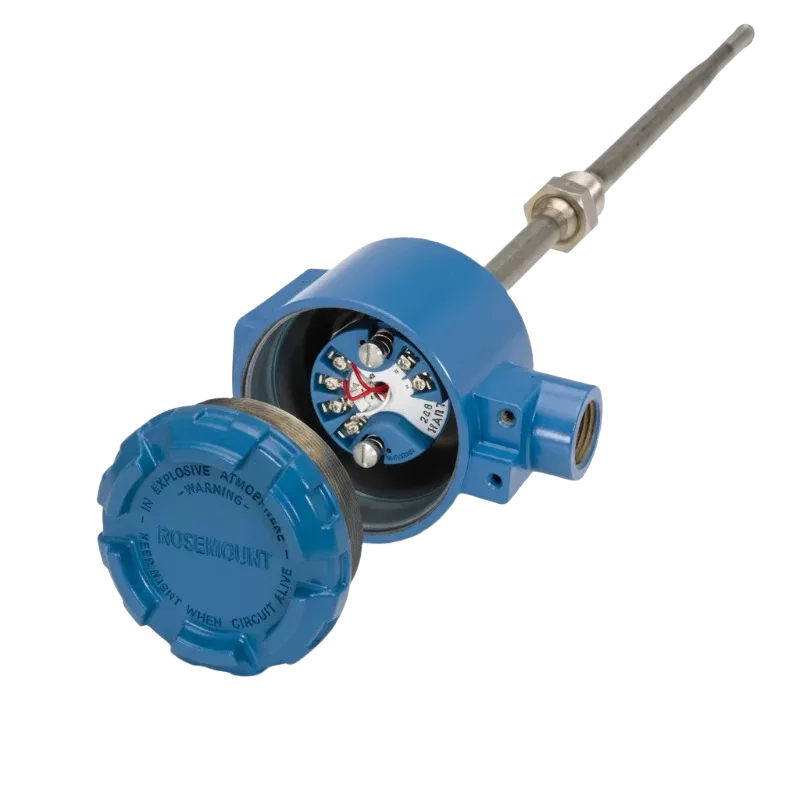
In industrial control systems, accurate temperature measurement faces a major challenge: lead wire resistance and electromagnetic noise in the environment. Many engineers using the online RTD (PT100) sensor resistance converter find that just 1 ohm of additional resistance in the lead cable can cause approximately 2.6 degrees Celsius of direct error in the PT100 sensor’s temperature reading. The standard engineering solution for eliminating this error is to use a temperature sensor converter (temperature transmitter) and select the correct wiring configuration.
Why use a temperature transmitter instead of transmitting PT100 resistance directly?
Resistance temperature detectors such as PT100 and PT1000 produce a very small change in resistance as the temperature changes (approximately 0.385 ohms per degree Celsius for a PT100). In contrast, thermocouple sensors (such as Type K or J, which can be calculated using the online thermocouple voltage and temperature converter) generate a voltage signal in the millivolt range. Transmitting these weak signals over long distances from the plant to the control room creates two fundamental problems:
- Voltage drop and cable resistance: As cable length increases and the ambient temperature of cable trays changes, wire resistance changes and adds to the PT100 sensor resistance.
- High susceptibility to noise (EMI): Routing the sensor cable alongside power cables, inverters (VFDs), and electric motors induces noise in the millivolt or resistance signal, causing severe fluctuations in the temperature reading at the PLC.
By installing a Head Mount temperature transmitter inside the sensor head, the weak sensor signal is converted at the measurement point into a standard industrial 4-20 mA current (or the HART digital protocol), which is highly resistant to cable resistance and ambient noise.
Comparison table of 2-wire, 3-wire, and 4-wire PT100 sensor wiring
| Connection type | How cable resistance is compensated | Engineering accuracy | Recommended industrial applications |
|---|---|---|---|
| 2-wire (2-Wire) | No compensation (the total resistance of the outgoing and return wires is added directly to the PT100 resistance) | Low (significant error with cables longer than 2 meters) | Very short distances only (direct installation on a head-mount transmitter) or PT1000 sensors |
| 3-wire (3-Wire) | Compensation via a Wheatstone bridge in the transmitter (assuming equal resistance in all 3 wires) | Industrial standard (high accuracy for 90% of processes) | The most common configuration in the oil, gas, petrochemical, steam, and production line industries |
| 4-wire (4-Wire) | Completely eliminates the effect of wire resistance (2 wires supply constant current, and 2 separate wires measure voltage without current) | Very high (laboratory and calibration accuracy) | Critical pharmaceutical processes, chemical reactors, metering (Custody Transfer), and laboratories |
Head Mount, Rail Mount, and Field Mount temperature transmitters: Which should you choose?
- Head Mount temperature transmitter: These puck-shaped converters are installed directly inside the sensor head (Form B). Since the PT100 element is only a few centimeters from the transmitter, environmental noise is eliminated before the signal is amplified, and the
4-20 mAsignal is sent to the control room over a standard two-wire twisted-pair cable. - Rail Mount temperature transmitter: Used when multiple temperature sensors are located close to a local panel, or when the ambient temperature at the sensor head installation point exceeds the electronics’ permitted limit (above 85 degrees Celsius). The 3- or 4-wire sensor cables are routed to the control panel and connected to rail-mount transmitters installed on the panel rail.
- Field Mount temperature transmitter: Features a rugged industrial enclosure (die-cast aluminum or stainless steel), a large local display, and explosion-proof certification (Ex d / Ex ia) for installation at refinery and petrochemical sites.
Consultation and price inquiries for temperature sensors and transmitters
To select the optimal combination of temperature sensor, thermowell, and industrial temperature transmitter for your project’s temperature range, operating pressure, and fluid type, submit your technical specifications through the online instrumentation price inquiry form. The engineers at Abzar Tamin Arshia (ATA) will provide the most accurate technical and commercial proposal.