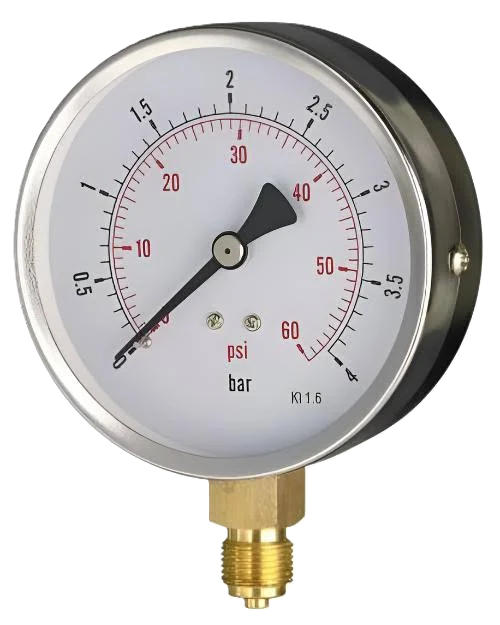
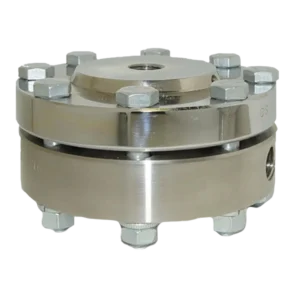
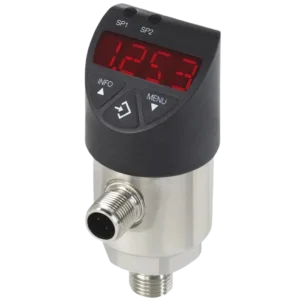
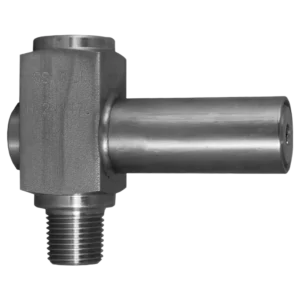
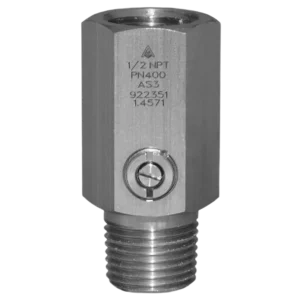
Analog Pressure Gauge
- Measures the gauge pressure of liquids and gases without requiring an electrical power supply.
- Operates on the Bourdon tube principle, offering high accuracy and good mechanical stability.
- Cost-effective, easy to install, and simple to maintain.
- Available in liquid-filled models to absorb vibration and pressure pulsations.
- Features a rugged case and standard process connection for use in industrial environments.
- Wide measuring range for low to very high pressure applications.

Engineering-Led Selection

Genuine Products, Direct Sourcing
Phone:
021-66572717An analog pressure gauge, also known as a Pressure Gauge and commonly referred to as a manometer, is one of the most widely used and fundamental mechanical instruments for measuring the pressure of liquids, gases, and steam in industry.
The most common type of these gauges is the Bourdon Tube model. A Bourdon Tube pressure gauge works as follows: when pressurized fluid enters the curved, hollow Bourdon tube, the tube tends to straighten and uncoil. This mechanical movement (displacement) is transmitted through a Gear and Pinion mechanism to the pointer, which indicates the pressure on the graduated Dial.
Thanks to their simple design, high reliability, and lack of need for an electrical power source, these gauges are used in a wide range of applications. From basic pressure monitoring in ventilation systems and compressors to pressure control in process vessels, boilers, and water and gas transmission networks, analog pressure gauges are an important monitoring instrument.

| Measured Variable | Pressure |
|---|---|
| Display Type | Analog, With Display |
| Fluid Type | Conductive Liquid, Gas, Non-Conductive Liquid, Steam |
| Installation Type | Contact, Direct Mount |
| Accuracy Class | ±1.5%, ±2% |
| Process Connection | Flange, Thread |
| Wetted Part Material | Brass, Stainless Steel |
| Portability | Fixed |
| Certification | General Purpose |
| Measurement Technology | Bourdon Tube Pressure Gauge |
Submit Your Request in One Place
You can add multiple instruments to one request. The form shows the fields available for each product.
Frequently Asked Questions
Pressure causes the Bourdon tube to deform, and the internal mechanism converts this movement into pointer motion. A standard display does not require electrical power.
Match normal pressure, maximum pressure, and any potential pressure pulses to the manufacturer’s allowable limits. Selecting a gauge based only on normal pressure may not provide adequate protection.
The liquid inside the case dampens pointer movement and usually does not come into contact with the process fluid. Compatibility should be checked based on the wetted-part materials and seal type.
The inlet temperature must remain below the gauge’s allowable limit. A siphon, cooling element, or diaphragm seal may be considered for temperature protection, depending on the operating conditions.
No. A gauge pressure measurement indicates the difference from atmospheric pressure. For absolute pressure or vacuum, select the appropriate measurement type and range.
Pressure pulsation, mechanical vibration, overpressure, or internal damage may be the cause. First, check the line conditions and gauge condition; a snubber is not a substitute for repairing a damaged gauge.
Provide the range and pressure type, dial diameter, accuracy class, connection type and position, wetted-part material, fluid, temperature, and vibration or pulsation conditions.