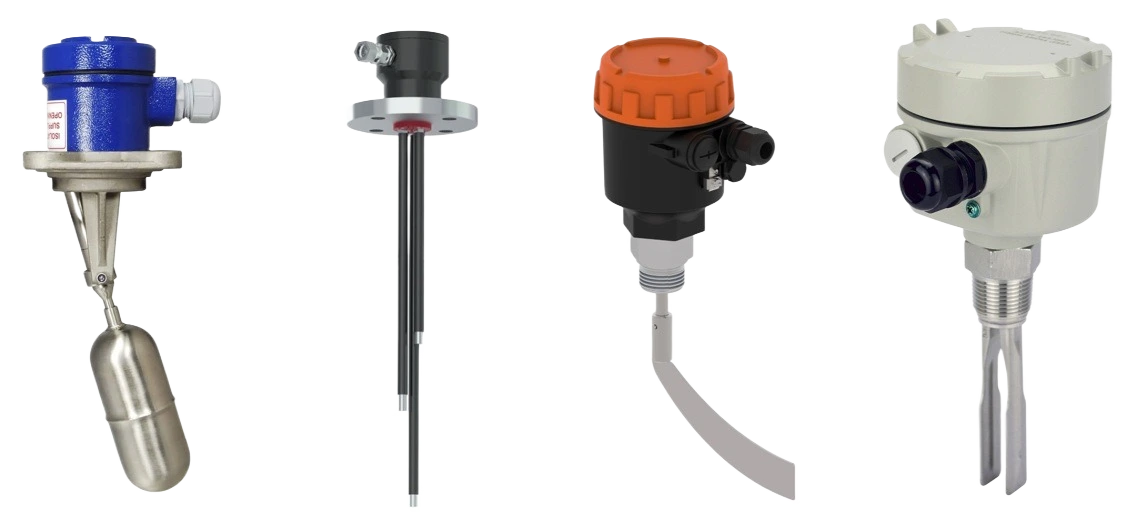
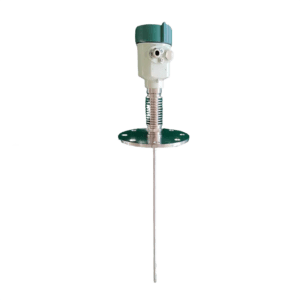
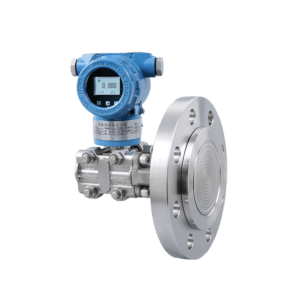
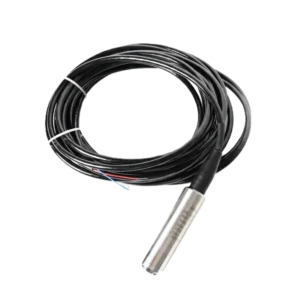
Level Switch
- Point Level Control to detect when the level reaches a critical limit.
- Essential equipment in alarm systems and pump control, and for preventing overflow.
- Digital ON/OFF signal output for direct connection to relays or .PLC
- A wide range of technologies (float, vibrating, capacitive, conductivity-based, etc.) to suit different fluids.
- Easy installation and simple setpoint configuration.
- Ideal for protection tasks such as protecting pumps against dry running.

Engineering-Led Selection

Genuine Products, Direct Sourcing
Phone:
021-66572717Level Switch is a control instrument designed to detect when the level of a liquid or bulk solid reaches a specific point (the upper or lower limit) inside a tank or another type of vessel. Its primary function is to send a discrete output signal (Digital ON/OFF) to the control system to trigger an alarm, start or stop pumps, or open or close valves. Unlike level transmitters, which provide continuous measurements (Continuous), level switches only indicate whether the level has or has not reached a set point (High/Low Alarm). These devices are critical for process safety and preventing overfilling or equipment running dry (Dry-Running).
Main types of available level switches:
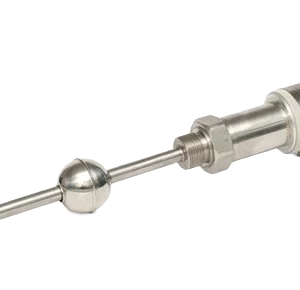
- Float Switch: Uses a hollow magnetic float that moves on the liquid surface. As the level changes, the float activates an internal magnetic mechanism to open or close the contacts.
- Conductivity Switch: Uses electrodes that complete an electrical circuit when they come into contact with a conductive liquid, such as water, activating the switch.
- Vibrating Fork / Tuning Fork Switch: Uses a vibrating metal fork (tuning fork). When it comes into contact with a fluid (liquid or solid), the vibration is dampened and a switch signal is generated.
- Capacitance Switch: Uses the dielectric properties of the fluid. As the level changes, the capacitance between the probe and the tank wall changes, activating the switch.
Given the range of applications (viscous liquids, corrosive fluids, bulk solids, etc.), consult our experts to select the most accurate and cost-effective level switch that is fully compatible with your process conditions.

| Measured Variable | Level |
|---|---|
| Fluid Type | Conductive Liquid, Non-Conductive Liquid, Slurry |
| Installation Type | Contact |
| Display Type | With Display, Without Display |
| Output Signal | Switch Output |
| Power Supply | 24V DC |
| Process Connection | Flange, Thread |
| Wetted Part Material | Plastic, PTFE, Stainless Steel |
| Certification | Ex-proof, General Purpose |
Submit Your Request in One Place
You can add multiple instruments to one request. The form shows the fields available for each product.
Frequently Asked Questions
A level switch signals when the material reaches a specific point, while a transmitter sends a continuous level measurement. Depending on your requirements, you may need both devices.
The material type, density, dielectric properties, adhesion, and tank conditions determine the right choice. A method suitable for water may not be suitable for powders or oil.
Only if the model is approved for both applications. Mechanical loads, bulk density, and material buildup in solids differ from conditions in liquids.
Material inlets, agitators, and buildup on the sensor can cause false operation. The installation point must suit the alarm level and the model’s limitations.
It can be part of a protection system. Alarm independence, failure behavior, response time, and tank safety requirements must be designed and assessed separately.
The output must have a defined response to hazardous conditions, faults, or loss of power. The High or Low logic and wiring must match the control circuit.
Provide the material type and properties, high or low alarm point, pressure and temperature, installation location and connection, probe length, output, and protection certification.