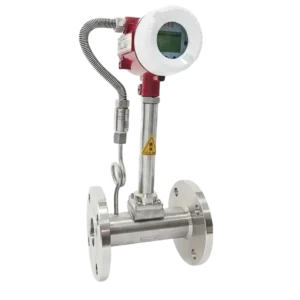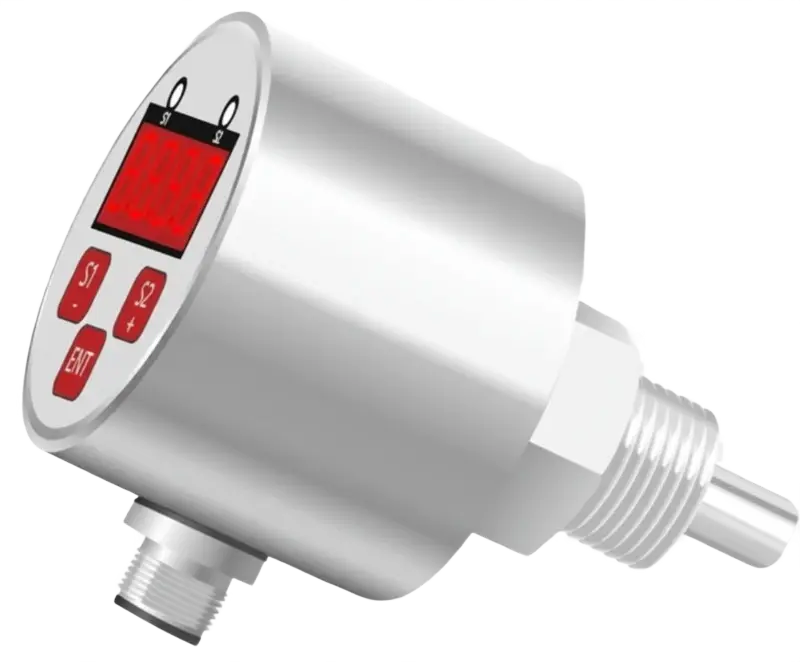

Flow Switch
- Simple and reliable operation for confirming the presence or absence of fluid flow.
- Suitable for a wide range of gas and liquid fluids under varying temperature and pressure conditions.
- Available with various mechanisms (paddle, thermal, piston, etc.) to suit different applications.
- Adjustable switching point (Set Point) for different flow rates.
- Cost-effective and, importantly, serves as a protective sensor for pumps and process equipment.

Engineering-Led Selection

Genuine Products, Direct Sourcing
Phone:
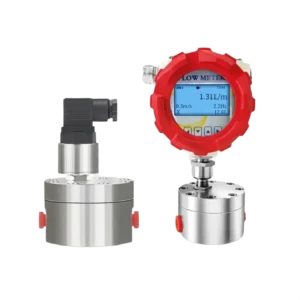
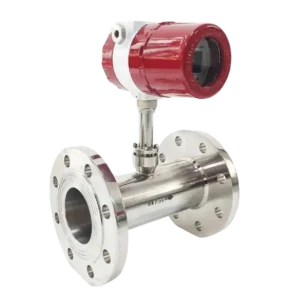
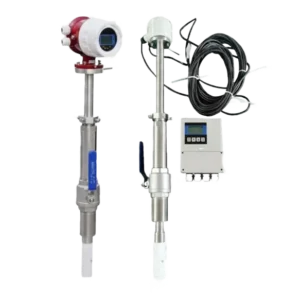
021-66572717Flow switch is a device used to protect and monitor the minimum or maximum flow of fluids in a pipeline or channel. Its primary function is not to measure the exact flow rate, but to send an ON/OFF signal to a control or alarm system if the flow rises above or falls below a specified set point.
Flow switches are manufactured in various types, each operating on a different physical principle. Some common types we can supply include:
1. Paddle/Vane Type: A paddle (blade) is positioned in the flow path and moves against the flow pressure to activate the switch.
2. Thermal Type: Operates based on the temperature difference caused when fluid passes over a heated sensor.
3. Magnetic/Piston Type: Operates based on the movement of a piston or float in response to flow pressure.
As safety and protective devices, flow switches are essential in applications such as protecting pumps against dry running, ensuring coolant flow in heat exchangers, and activating safety systems in fire protection lines.
| Display Type | Digital, With Display |
|---|---|
| Fluid Type | Conductive Liquid, Non-Conductive Liquid |
| Measured Variable | Flow |
| Output Signal | Switch Output |
| Power Supply | 24V DC |
| Process Connection | Thread |
| Wetted Part Material | Stainless Steel |

Flow Switch Overview
Submit Your Request in One Place
You can add multiple instruments to one request. The form shows the fields available for each product.
Frequently Asked Questions
A flow switch indicates when flow reaches a set threshold; a flow meter measures the flow rate. If continuous flow-rate display is required, check whether the device has this capability.
Paddle, piston, and thermal flow switches are suited to different applications. The fluid type, viscosity, cleanliness, line size, and required flow threshold determine the right choice.
The operating point is where the output changes state; the reset point is where it returns to its original state. The difference between these points is hysteresis, which prevents frequent switching.
It can be part of a protection circuit, but the installation location, delay time, control logic, and failure behavior should also be considered. Installing a switch alone does not guarantee protection.
Yes. The flow direction and permitted installation orientation depend on the switch mechanism. Incorrect installation or an unsuitable paddle length can change the operating point.
Depending on the model, it may have a relay contact or transistor output. The power supply, contact rating, and PNP or NPN compatibility should be checked against the PLC input.
Provide the fluid type, normal flow rate and alarm threshold, pipe size, pressure and temperature, installation conditions, output type, and environmental protection requirements.