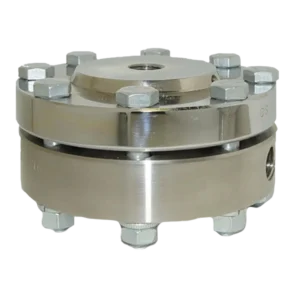
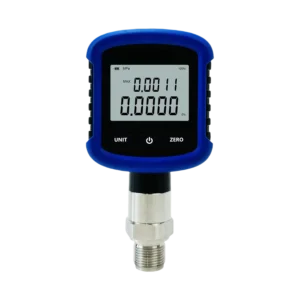
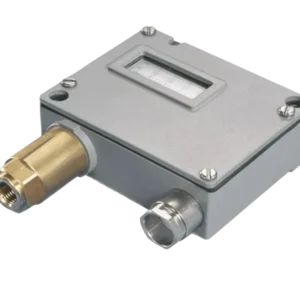
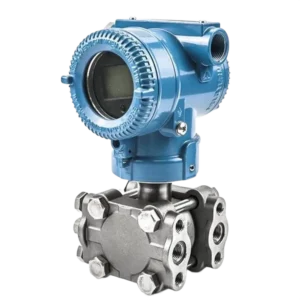
Differential Pressure Gauge

  • Accurate measurement of the differential pressure between two points.
  • An essential instrument for monitoring the degree of blockage in filters and heat exchangers.
  • Used as a secondary instrument for measuring the flow rate of liquids and gases.
  • Capable of measuring the level in closed, pressurized tanks.
  • Robust mechanical construction designed to withstand high static pressure.
  • Requires no electrical power supply and is easy to install.

Engineering-Led Selection

Genuine Products, Direct Sourcing

×

Phone:

021-66572717
Product Overview

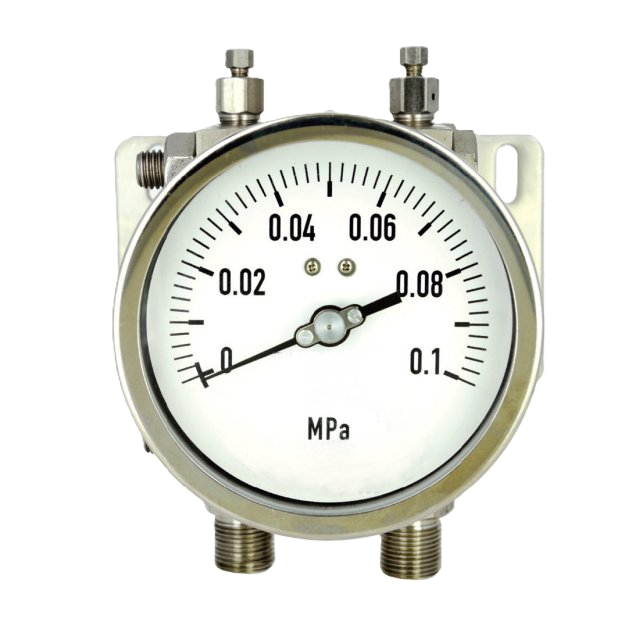
Analog differential pressure gauges are mechanical instruments used to measure the pressure difference between two points. Rather than displaying the absolute or gauge pressure at a single point, they indicate the differential pressure, which has many applications in industrial processes.

These instruments typically operate using a diaphragm, piston, or twin Bourdon tubes exposed to pressure on both sides (the high-pressure side and the low-pressure side). The movement or displacement of the sensing element is proportional to the net force generated by the pressure difference between the two points. A mechanical mechanism transfers this movement to the pointer, which indicates the differential pressure on the graduated dial.

Differential pressure gauges can be used to monitor filters and strainers (indicating clogging), measure the liquid level in closed pressurized tanks, and measure flow using an orifice plate or Venturi tube.

Key Features
Measured Variable
Display Type
Fluid Type
Installation Type
Accuracy Class
Process Connection
Wetted Part Material
Portability
Certification
Measurement Technology
Request a Quote
Technical & Commercial RFQ

Submit Your Request in One Place

You can add multiple instruments to one request. The form shows the fields available for each product.

ATA SMART RFQ Engineering Insight, Precision Supply
۱

Contact Information

We will send the quotation response to this contact.

۲

Select and Add a Product

Search for a product or select one from the list to add its form.

Standard specifications will be listed in the quotation. You can request changes after receiving it.

۳

Attachments and Notes

Attach at least one file when choosing Upload RFQ Files Only.

Choose FilesPDF, Word, Excel, image, DWG or DXF — up to 10 MB per file
    ۰ قلم تجهیزAll items and files will share one tracking number.

    Frequently Asked Questions

    It indicates the pressure difference between two points. The differential may be small even when the static pressure on both sides is high, so both specifications must be checked.

    The two gauge ports are connected upstream and downstream of the filter. An increase in differential pressure may indicate clogging; refer to the filter specifications for the allowable limit.

    No. The measurement range and allowable static pressure are two different specifications. One-sided overpressure protection must also be checked separately.

    H is connected to the higher-pressure point, and L to the lower-pressure point. Reversing them can cause a reversed or out-of-range reading.

    In suitable applications, the differential pressure of the liquid column can be converted to level. Density, pressure in the tank headspace, and the connection arrangement must be taken into account in the calculation.

    Blockages, leaks, trapped air, or a difference in liquid-column height between the two lines can cause errors. Install the lines according to the fluid type and installation instructions.

    Specify the differential pressure range, static pressure and overpressure, fluid and temperature, materials, connection, dial size, and whether alarm contacts are required.