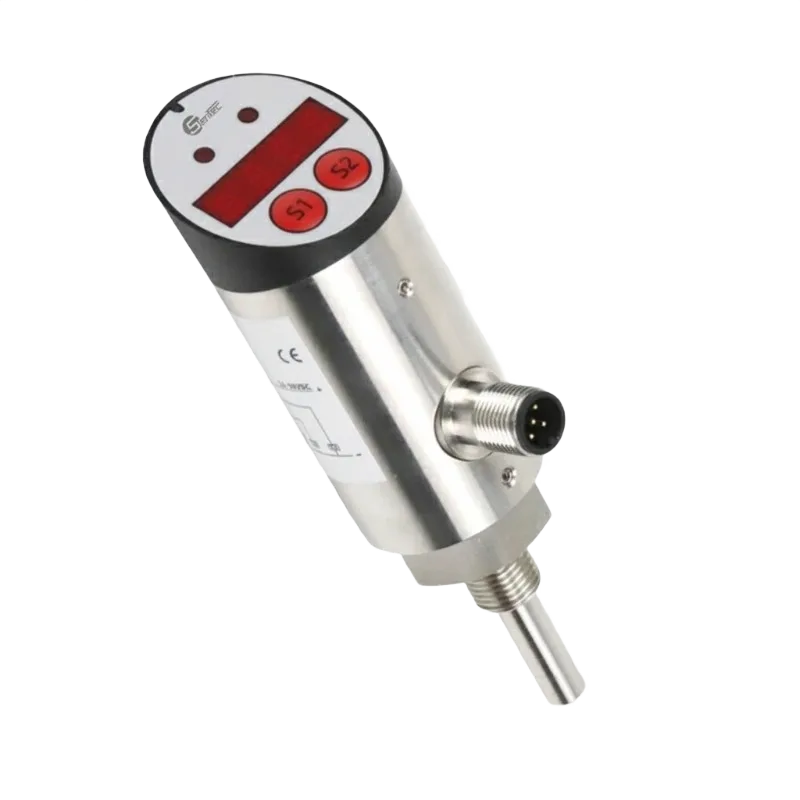

Electronic Temperature Switch
- Very high accuracy in temperature measurement and switching activation.
- Digital display for viewing the temperature and setpoints simultaneously.
- Easy and precise adjustment of the switching point and hysteresis (switch-on/switch-off differential).
- Multiple switching points can be configured for alarms or two-stage control.
- Electronic outputs (PNP/NPN) for direct connection to a PLC or relay.
- Robust construction with no mechanical parts subject to wear.

Engineering-Led Selection

Genuine Products, Direct Sourcing
Phone:
021-66572717Electronic temperature switch is an intelligent, precise device that combines the capabilities of a temperature sensor, such as an RTD or thermocouple, a digital display, and a control switch in one compact unit. It serves as a more accurate alternative to mechanical thermostats.
Operating principle: At the heart of this switch, an electronic temperature sensor (usually an RTD) measures the fluid temperature with high accuracy. An internal microprocessor processes the temperature signal and displays it on the digital display. The user can program the desired set point and hysteresis using the buttons. When the measured temperature crosses the set point, the microprocessor activates the switching output (usually a PNP or NPN transistor output).
These switches are used in advanced control systems, machinery, and wherever precise temperature control and local temperature indication are required, thanks to their exceptional switching accuracy, easy programmability, and ability to configure multiple switching points (high and low alarms).
| Measured Variable | Temperature |
|---|---|
| Accuracy Class | ±0.5% |
| Certification | General Purpose |
| Display Type | Digital, With Display |
| Fluid Type | Conductive Liquid, Gas, Non-Conductive Liquid, Steam |
| Output Signal | Switch Output |
| Process Connection | Thread |
| Wetted Part Material | Stainless Steel |
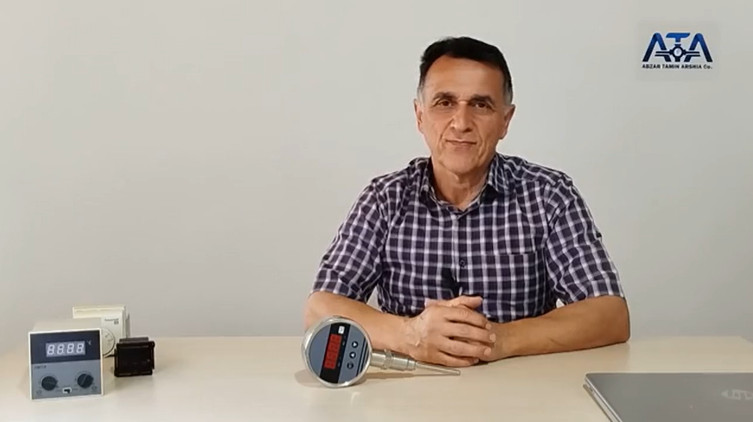
Introduction to Temperature Switches
Submit Your Request in One Place
You can add multiple instruments to one request. The form shows the fields available for each product.
Frequently Asked Questions
It uses a sensor and electronic processing to change the output. A display and digital adjustment may be available; the power supply and output depend on the model.
This may be possible with models that have an analog or digital output. Some models have only a switching output, and continuous transmission must be ordered separately.
No; some models have an internal sensor, while others have an input for an external sensor. The input type and sensor specifications must be matched to the application range.
It creates a gap between output activation and reset, reducing repeated switching near the setpoint. The value should be appropriate for the control requirements.
They are selected based on the load, PLC input, voltage and current, and isolation requirements. PNP and NPN outputs cannot be interchanged without matching the circuit.
This should not be assumed without checking its safety capability and control circuit. Power-loss behavior, sensor failure, and the need for independent protection must be specified.
Please provide the range, switching points, sensor type and dimensions, output, power supply, process connection, permissible pressure, display requirements, and ambient conditions.