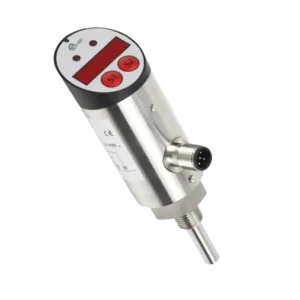
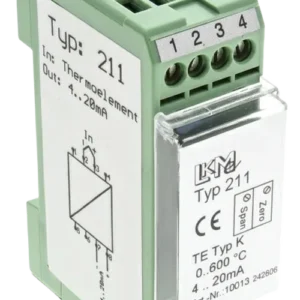
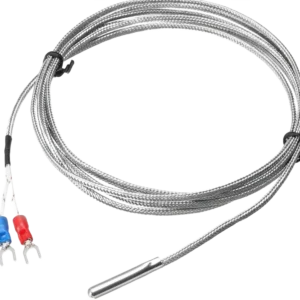
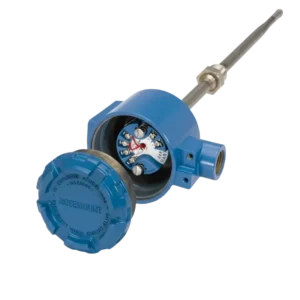
RTD and PT100 Temperature Sensors

  • Very high accuracy and stability in temperature measurement, especially across the mid-temperature range.
  • Excellent measurement repeatability and minimal drift over time.
  • Linear performance across a wide temperature range and easy calibration.
  • No need for compensation wires, unlike thermocouples.
  • Ideal for sensitive and critical applications, such as the pharmaceutical and food industries.
  • Available in various configurations (2-wire, 3-wire, and 4-wire) to eliminate wire resistance error.

Engineering-Led Selection

Genuine Products, Direct Sourcing

×

Phone:

021-66572717
Product Overview

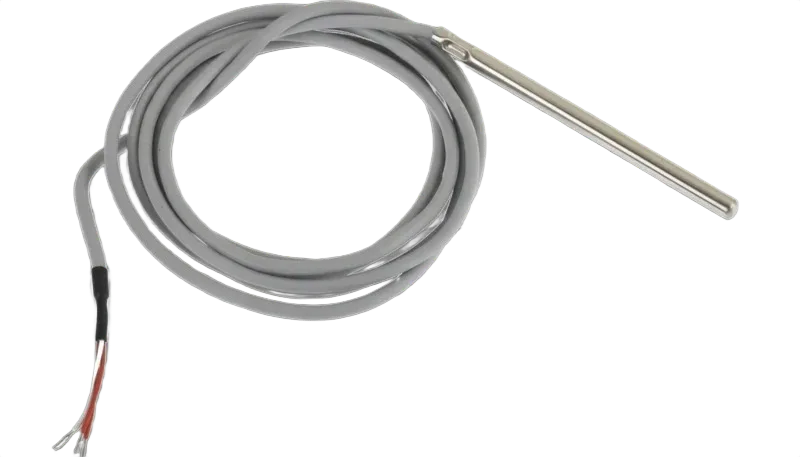
A resistance temperature detector (RTD) is a precision electronic sensor that operates based on changes in the electrical resistance of a pure metal as its temperature changes. The most common type of RTD is the PT100 sensor, which has a nominal resistance of 100 ohms at 0 degrees Celsius.

Operating principle: Metals such as platinum, nickel, and copper have a positive temperature coefficient, meaning their electrical resistance increases predictably as temperature rises. An RTD may consist of a fine wire wound into a coil or a thin platinum film exposed to the process temperature. By measuring the sensor element’s resistance using a constant electrical current and a bridge circuit, temperature can be calculated with very high accuracy over a wide range.

Thanks to their high accuracy, excellent repeatability, and long-term stability, RTDs are used as an industrial standard in critical applications. These sensors are used in the pharmaceutical and food industries, laboratory equipment, chemical processes, and anywhere accurate temperature measurement and data logging through a transmitter or PLC are required.

Key Features
Measured Variable
Measurement Technology
Fluid Type
Installation Type
Accuracy Class
Process Connection
Wetted Part Material
Portability
Certification
Request a Quote
Technical & Commercial RFQ

Submit Your Request in One Place

You can add multiple instruments to one request. The form shows the fields available for each product.

ATA SMART RFQ Engineering Insight, Precision Supply
۱

Contact Information

We will send the quotation response to this contact.

۲

Select and Add a Product

Search for a product or select one from the list to add its form.

Standard specifications will be listed in the quotation. You can request changes after receiving it.

۳

Attachments and Notes

Attach at least one file when choosing Upload RFQ Files Only.

Choose FilesPDF, Word, Excel, image, DWG or DXF — up to 10 MB per file
    ۰ قلم تجهیزAll items and files will share one tracking number.

    Frequently Asked Questions

    Their nominal resistance at 0°C is 100 and 1000 ohms, respectively. The instrument input must be compatible with the element type and its characteristic curve.

    With a 2-wire connection, lead resistance is added to the measurement. With a compatible input, 3- and 4-wire connections reduce this effect; the compensation method and wiring quality are important.

    Only to a dedicated RTD input, with the sensor type and number of wires configured correctly. A suitable transmitter is required for a standard current input.

    The element accuracy class describes only part of the overall error. Wiring, the transmitter, installation, heat transfer, and calibration also affect the final result.

    No. The element type, construction, and sheath material determine its operating limits. Check the specifications for the particular sensor to confirm its valid temperature range.

    Sheath diameter, element construction, the thermowell, and thermal contact all affect response time. Increased mechanical protection can generally slow the thermal response.

    Please provide the element type, accuracy class, temperature range, number of wires and elements, sheath dimensions and material, connection type, and whether a head or thermowell is required.