
Thermocouple with Integrated Transmitter

  • A complete, integrated temperature measurement solution (sensor + transmitter) for easy installation in the process.
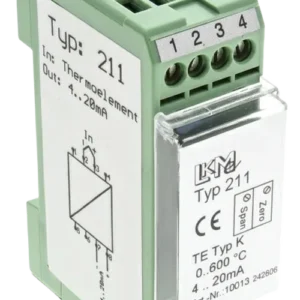
  • Eliminates noise and lead-wire resistance errors by converting the signal at the measurement point (head).
  • Standard industrial 4 to 20 mA signal output for direct connection to DCS/PLC.
  • Improves temperature signal accuracy and stability over long transmission distances.
  • Range and sensor type can be configured using a smart head-mounted transmitter.
  • Durable connection head protects the transmitter from the industrial environment.

Engineering-Led Selection

Genuine Products, Direct Sourcing

×

Phone:

021-66572717
Product Overview

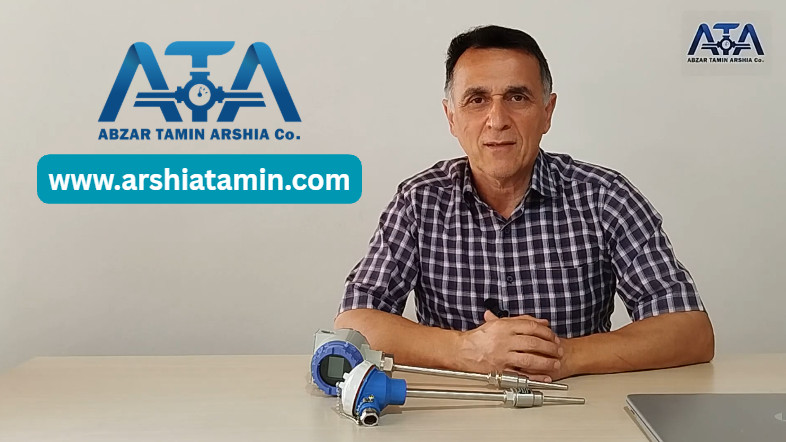
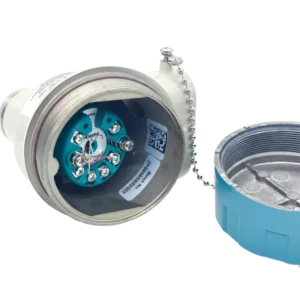
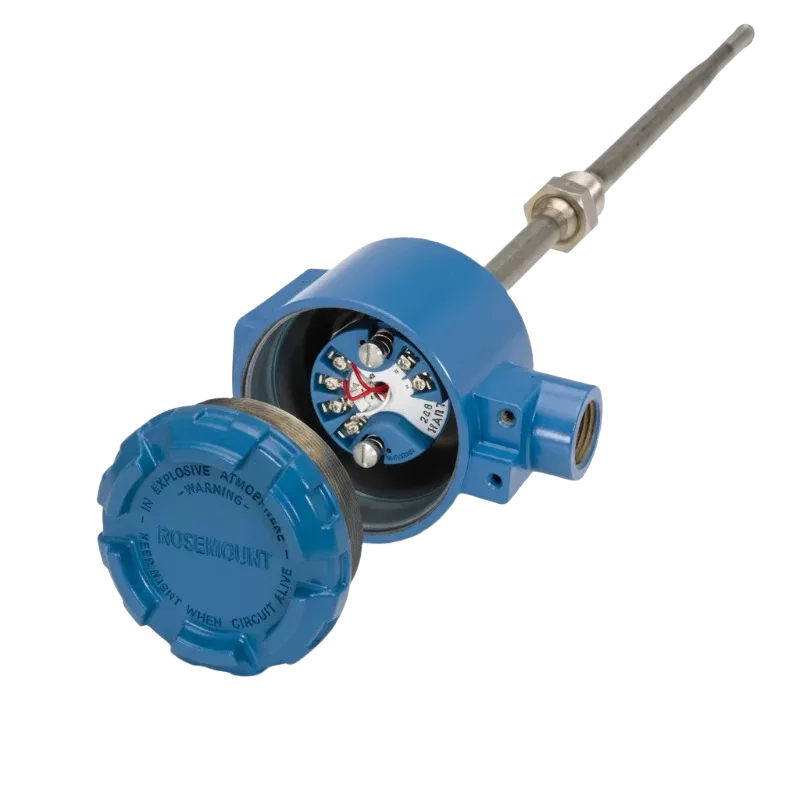
In an integrated temperature sensor and transmitter, the thermocouple temperature sensor and its corresponding head-mounted transmitter are assembled together in a single housing (protective head). This combination ensures high measurement accuracy and easy installation at the process site, and is the most common form of electronic temperature installation in industry.

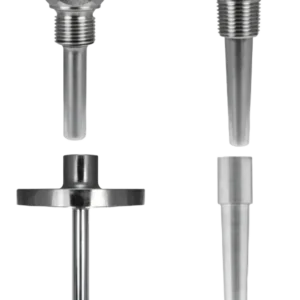
Operating principle: The thermocouple sensor is inserted directly into the thermowell stem, and the ends of its wires are connected to the transmitter input terminals (mounted in the head). At the measurement point, the transmitter amplifies the low-level temperature signal and converts it into a standard 4 to 20 mA signal. This method significantly reduces noise and lead resistance errors, which are common when transmitting low-level temperature signals.

In addition to improving signal stability, using an integrated system also simplifies troubleshooting, since all electronic components are concentrated at a single point. This product is used across all process industries, particularly in environments where temperature signals must be transmitted over long distances without loss of quality.

Key Features
Measured Variable
Measurement Technology
Fluid Type
Installation Type
Output Signal
Power Supply
Process Connection
Wetted Part Material
Portability
Videos
Introduction to Temperature Transmitters

Introduction to Temperature Transmitters

Request a Quote
Technical & Commercial RFQ

Submit Your Request in One Place

You can add multiple instruments to one request. The form shows the fields available for each product.

ATA SMART RFQ Engineering Insight, Precision Supply
۱

Contact Information

We will send the quotation response to this contact.

۲

Select and Add a Product

Search for a product or select one from the list to add its form.

Standard specifications will be listed in the quotation. You can request changes after receiving it.

۳

Attachments and Notes

Attach at least one file when choosing Upload RFQ Files Only.

Choose FilesPDF, Word, Excel, image, DWG or DXF — up to 10 MB per file
    ۰ قلم تجهیزAll items and files will share one tracking number.

    Frequently Asked Questions

    A compatible thermocouple sensor and transmitter are installed as a single assembly. The head, connection, and thermowell should be specified according to the actual items ordered.

    Long-distance transmission uses an industrial signal, making it less susceptible to certain types of interference. Wiring and grounding must still be done correctly.

    Yes; the input type, range, and cold-junction compensation must match the installed sensor. Any mismatch in these settings will cause temperature measurement errors.

    If the assembly has a standard current output, a cable suitable for the signal loop is typically used. The section between the thermocouple and transmitter must still use a compatible cable.

    Yes; the type, polarity, range, and junction type must be checked. After replacement, we recommend checking the performance of the entire assembly, from the sensor to the output.

    No; whether a thermowell is required and which type to use depend on the application and the order. Pressure, corrosion, fluid velocity, and the need to replace the sensor are important selection factors.

    Please specify the thermocouple type, range, sheath material and length, junction type, thermowell, output, power supply, head, and environmental requirements.