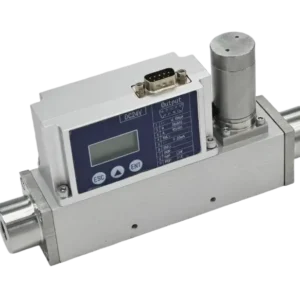
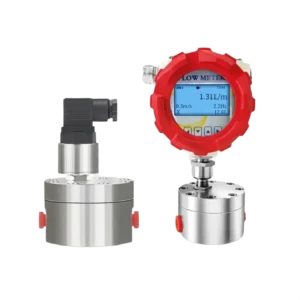
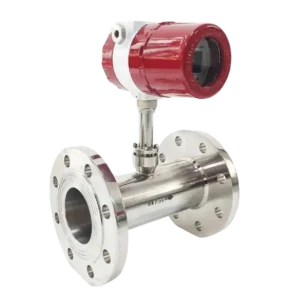
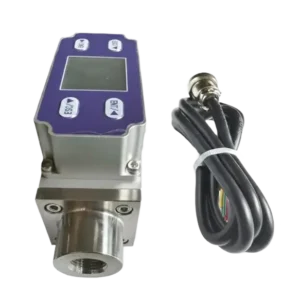
In-line Ultrasonic Flow Meter

  • High measurement accuracy thanks to optimal sensor installation by the manufacturer.
  • Long-term stability, with periodic performance checks required depending on the application.
  • No moving parts, resulting in reduced maintenance requirements and negligible pressure drop.
  • Suitable for a wide range of clean industrial and process liquids.

Engineering-Led Selection

Genuine Products, Direct Sourcing

×

Phone:

021-66572717
Product Overview

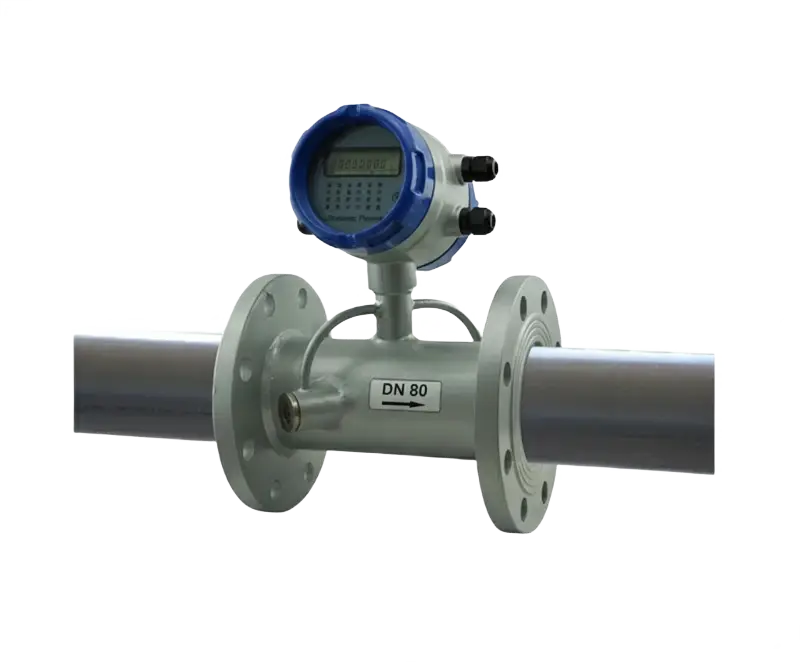
In-line ultrasonic flow meter also operates on the Transit-Time principle, but unlike clamp-on models, its transmitter and receiver sensors are built directly into the flow meter pipe wall.

In this model, the measuring tube is made from smooth, precision-engineered materials, and the sensors (transducers) are positioned at precisely defined angles and locations to achieve the highest possible accuracy when measuring the time difference between ultrasonic pulses traveling with and against the flow. These flow meters calculate the fluid’s average velocity with very high accuracy and determine its volumetric flow rate.

The main advantage of the In-line model is its much higher accuracy and better long-term stability compared with clamp-on models, because the sensor installation is optimized by the manufacturer, reducing dependence on external pipe conditions. This flow meter is also suitable for clean fluids (free of bubbles and significant amounts of suspended particles).

Key Features
Measured Variable
Measurement Technology
Fluid Type
Installation Type
Accuracy Class
Display Type
Output Signal
Process Connection
Portability
Request a Quote
Technical & Commercial RFQ

Submit Your Request in One Place

You can add multiple instruments to one request. The form shows the fields available for each product.

ATA SMART RFQ Engineering Insight, Precision Supply
۱

Contact Information

We will send the quotation response to this contact.

۲

Select and Add a Product

Search for a product or select one from the list to add its form.

Standard specifications will be listed in the quotation. You can request changes after receiving it.

۳

Attachments and Notes

Attach at least one file when choosing Upload RFQ Files Only.

Choose FilesPDF, Word, Excel, image, DWG or DXF — up to 10 MB per file
    ۰ قلم تجهیزAll items and files will share one tracking number.

    Frequently Asked Questions

    The difference in the wave transit time in and against the direction of flow is converted into fluid velocity. With a known cross-sectional area, the volumetric flow rate can be calculated.

    The flow path geometry and sensor positions are defined by the meter body. The meter is less sensitive to the pipe’s external surface characteristics; however, final accuracy still depends on the model and installation.

    Transit-time models depend on fluid quality to ensure proper wave transmission. Bubbles and high particle concentrations can weaken the signal, so the model’s permissible limits should be checked.

    No. Unlike a magnetic flow meter, this method does not require electrical conductivity. Acoustic properties, fluid cleanliness, and compatibility with the body and sensors are important.

    Yes. The meter body becomes part of the pipeline, so installation requires a mechanical connection and usually a line shutdown or bypass.

    Yes. The absence of moving parts does not eliminate the need to check performance. Sensor condition, deposits, zero point, and comparison with a reference should be checked as appropriate for the application.

    Provide the fluid type, minimum-to-maximum flow rate, pressure and temperature, size and connection class, body material, output, and straight-run conditions.