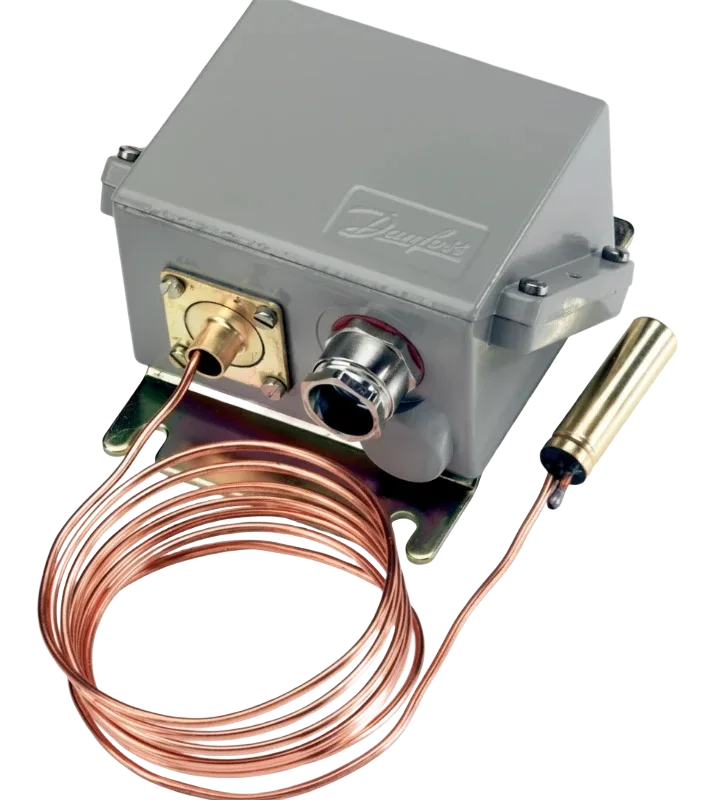
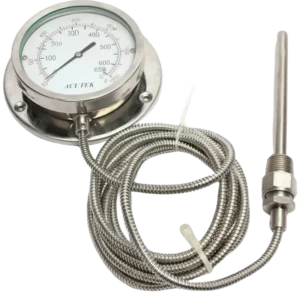
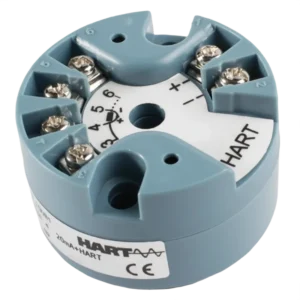
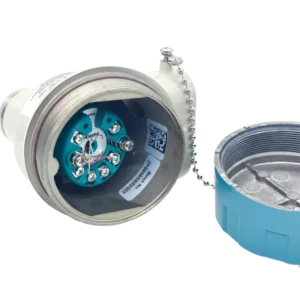
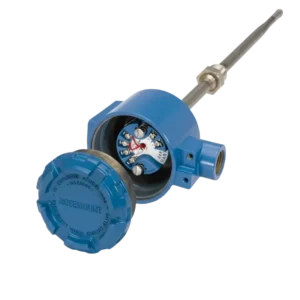
Mechanical Temperature Switch
- Simple, reliable temperature-based ON/OFF switching.
- No electrical power supply required for switching operation.
- Features an adjustable set point that can be set at the installation site.
- Ideal for protective applications, such as preventing overheating or freezing.
- Features robust NO/NC contacts capable of handling electrical currents.
- Available in bimetal or fluid-filled models for remote sensor installation.

Engineering-Led Selection

Genuine Products, Direct Sourcing
Phone:
021-66572717Mechanical temperature switch, or mechanical thermostat, is a control device designed to monitor process temperature and issue an electrical ON/OFF signal when the temperature reaches a specified Set Point. These devices are commonly used in systems that require basic thermal control or protection.
These switches typically operate based on the principle of liquid expansion (Liquid-Filled Bulb) or the expansion of a bimetallic element (Bimetal Strip).
- Liquid-filled type: The sensor, or sensing bulb, is filled with a liquid (such as mercury or alcohol). As the temperature rises, the liquid inside the bulb expands, and this increase in volume is transmitted through a Capillary Tube to a diaphragm or Bourdon tube inside the switch enclosure. The resulting pressure activates a Micro Switch.
- Bimetal type: A bimetallic disc or strip changes shape at the set temperature, directly opening or closing the contacts.
Temperature switches are essential safety devices used to shut down fans, activate overtemperature alarms, or control heating and cooling systems in industrial processes, HVAC systems, motors, and more.

| Measured Variable | Temperature |
|---|---|
| Measurement Technology | Bimetal, Filled System |
| Display Type | Without Display |
| Fluid Type | Conductive Liquid, Gas, Non-Conductive Liquid, Steam |
| Installation Type | Contact, Direct Mount, Remote Mount |
| Output Signal | Switch Output |
| Process Connection | Thread |
| Wetted Part Material | Stainless Steel |
| Portability | Fixed |
Submit Your Request in One Place
You can add multiple instruments to one request. The form shows the fields available for each product.
Frequently Asked Questions
When the temperature reaches the set limit, it changes the electrical contact state. It is used for limit control or alarms and typically does not transmit continuous measurements.
The sensing mechanism is usually unpowered; the circuit connected to the contact requires its own power supply. The contact rating must be compatible with the load.
The contact usually changes state at two different values as the temperature rises and falls. This difference is called hysteresis or Deadband and is important when selecting a switch.
This may be possible with a capillary model. The capillary length and routing, as well as the ambient temperature limits, must be specified when ordering; the capillary must not be modified without authorization.
This may be possible only within the contact rating and with a properly designed circuit. For high loads or safety-related applications, an interface and independent protection should be considered.
The sensing section must have sufficient immersion and thermal contact. Improper installation or thermowell lag can affect the operating time and temperature.
Provide the range, operating and reset points, maximum temperature, bulb and capillary lengths, connection, material, and contact type and rating.