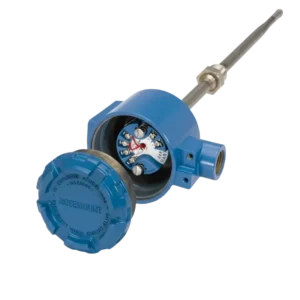
Thermowell
- Mechanical and chemical protection of temperature sensors against pressure, corrosion, and flow velocity.
- Allows temperature sensors to be replaced without shutting down the process.
- Significantly extends the service life of expensive temperature sensors.
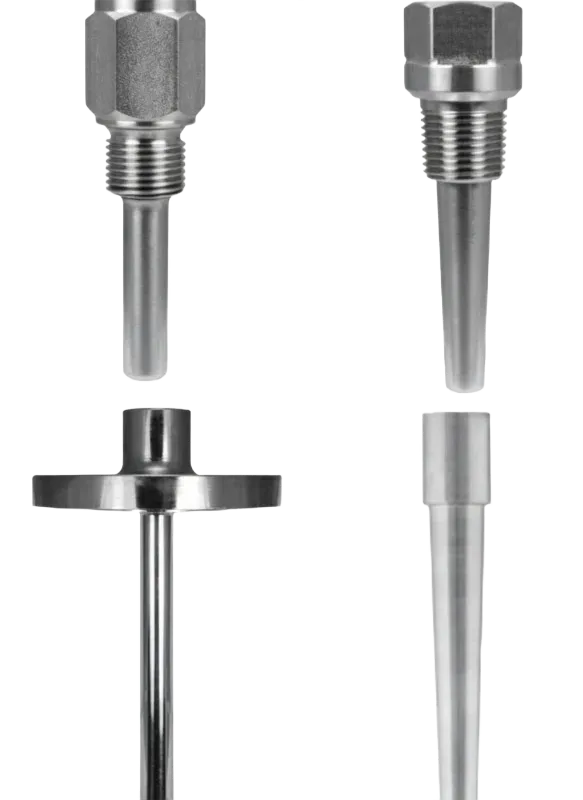
- Available in various connection types (threaded, flanged, and welded) and shapes (straight and tapered).
- A range of materials is available to ensure compatibility with corrosive fluids.
- Designed to withstand high process pressures and the mechanical forces exerted by high-velocity fluids.

Engineering-Led Selection

Genuine Products, Direct Sourcing
Phone:
021-66572717A thermowell is a protective metal tube or sleeve permanently installed in the wall of a process pipeline or vessel. Its primary purpose is to isolate the temperature sensor (such as an RTD, thermocouple, or even a mechanical thermometer) from the process medium, allowing the sensor to measure the fluid temperature without direct contact.
The thermowell’s critical function in industry is to protect the sensor from four main hazards:
1. High pressure: Preventing the sensor stem from breaking under high process pressures.
2. Chemical corrosion: Protecting the sensor’s sensitive materials from corrosive fluids.
3. High flow/velocity: Preventing mechanical failure of the sensor due to the fluid’s high shear force.
4. Replacement during operation: Allowing the temperature sensor to be removed and replaced for calibration or repair without draining the system or shutting down the entire process.
Thermowells are available in various shapes and materials (such as threaded, flanged, and welded designs, as well as straight, tapered, or stepped types), with materials suited to the process environment (such as stainless steel, etc.).

| Measured Variable | Temperature |
|---|---|
| Fluid Type | Conductive Liquid, Gas, Non-Conductive Liquid, Steam |
| Installation Type | Contact, Direct Mount |
| Process Connection | Flange, Thread, Welded |
| Wetted Part Material | Stainless Steel |
| Portability | Fixed |
Submit Your Request in One Place
You can add multiple instruments to one request. The form shows the fields available for each product.
Frequently Asked Questions
It isolates the temperature sensor from direct contact with process pressure, corrosion, and flow. The thermowell does not measure temperature itself and must be compatible with the sensor.
With a suitable arrangement, the sensor can be safely removed from inside the thermowell. This does not authorize removing the thermowell itself while it is under pressure; safe procedures must be followed.
It depends on the pipe diameter, measurement location, heat transfer, and mechanical conditions. Increasing the length without checking strength and vibration is not permitted.
Flow vortices can excite the thermowell and, under unsuitable conditions, cause fatigue. Velocity, density, geometry, and design conditions all affect the mechanical assessment.
Material is selected based on corrosion, temperature, pressure, and compatibility with the process fluid. Stainless steel alone is not sufficient for every corrosive environment.
Yes. Its mass, wall thickness, and thermal contact can slow the response. The sensor diameter and bore must be matched to the measurement requirements.
Please provide the pressure, temperature, velocity and process fluid specifications, material, immersion length, process connection, sensor dimensions, and any calculation or testing requirements.