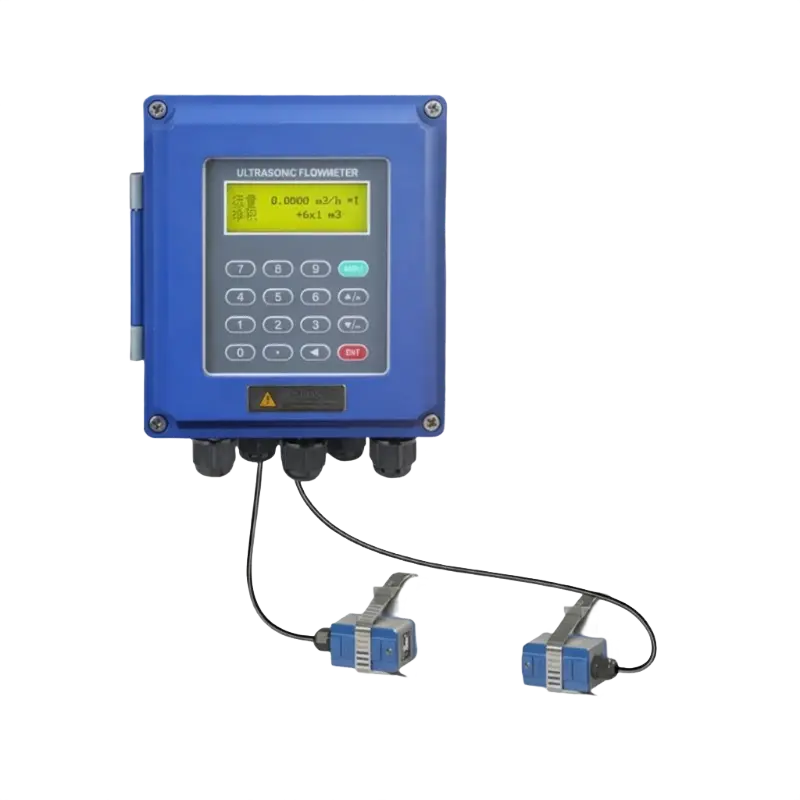

Clamp-On Ultrasonic Flow Meter
- Quick and easy installation without stopping the process or cutting the pipeline.
- Non-contact measurement, suitable for corrosive, toxic, and high-pressure fluids.
- No pressure drop in the system.
- Flow measurement depends on fluid conditions, a full pipe, and correct sensor installation.
- Can be installed on a wide range of pipe diameters and materials.
- Portable models are available for periodic monitoring and troubleshooting.

Engineering-Led Selection

Genuine Products, Direct Sourcing
Phone:
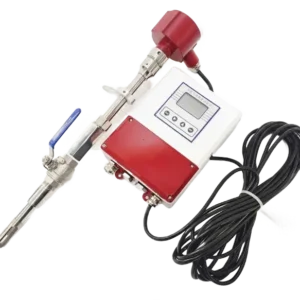
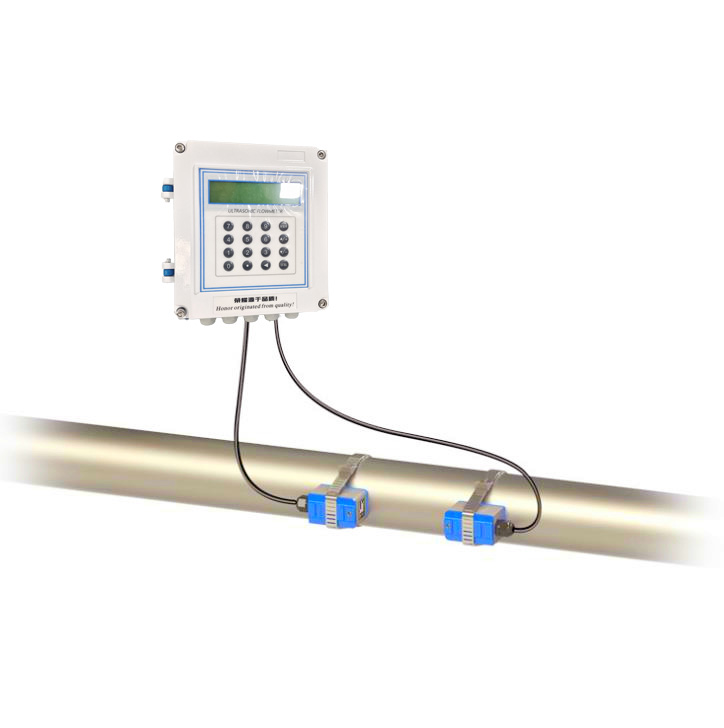
021-66572717Ultrasonic flow meter A clamp-on, transit-time ultrasonic flow meter is an effective measurement method designed to measure the flow rate of clean liquids without contacting the fluid or cutting the pipe. It consists of two sensors (transducers) that are easily installed on the outside surface of the pipe.
This flow meter operates by measuring the difference in the transit times of ultrasonic pulses between the two sensors:
1. One pulse is transmitted in the direction of fluid flow (Downstream).
2. Another pulse is transmitted against the direction of flow (Upstream).
The fluid velocity causes the pulse traveling in the direction of flow to arrive sooner than the pulse traveling against the flow. By accurately measuring this time difference, the flow meter calculates the average fluid velocity and, consequently, the volumetric flow rate.
The main advantages of this model include:
- Quick and easy installation without cutting the pipe, stopping the process, or draining the fluid.
- Ideal for toxic or corrosive fluids, as the sensors do not contact the fluid.
- Much lower installation costs than In-line flow meters, especially for large pipes.
Clamp-on ultrasonic flow meters are widely used in water and wastewater, oil and petrochemical (clean-fluid) industries, and energy monitoring systems (Energy Monitoring) that require temporary or permanent measurement.
| Accuracy Class | ±1% |
|---|---|
| Display Type | Digital, With Display |
| Installation Type | Clamp-on |
| Certification | General Purpose |
| IP Rating | IP65 |
| Measured Variable | Flow |
| Measurement Technology | Ultrasonic |
| Output Signal | 4-20 mA, RS485 |
| Portability | Portable |
| Power Supply | 24V DC |
Introduction to Ultrasonic Flow Meters
Initial Setup and Commissioning
Chemical Production Plant - Mazandaran
Reflux Unit
1405/04/08
Submit Your Request in One Place
You can add multiple instruments to one request. The form shows the fields available for each product.
Frequently Asked Questions
A clamp-on ultrasonic flow meter measures the flow rate of liquids using ultrasonic waves, without requiring pipe cutting or direct contact with the fluid.
The device’s sensors are mounted on the outside of the pipe. No modifications to the piping, drilling, or interruption to the production process are required.
This instrument is suitable for measuring the flow of water, purified water, industrial water, hot and cold water, wastewater with low particle content, oil, chemicals, and many other homogeneous liquids.
No. One of the key advantages of this device is that it can be installed without stopping the process or disrupting system operation.
Depending on the model, installation quality, and process conditions, measurement accuracy is typically up to approximately ±1 percent or better.
Clamp-on flow meters can be installed on various metallic and non-metallic pipes, including steel, stainless steel, PVC, polyethylene, cast iron, copper, and aluminum.
Because the sensors do not contact the fluid and the device has no moving parts, these instruments require very little maintenance and have low servicing costs.
Yes. Many models feature standard outputs such as 4-20mA, Pulse, RS485, and the Modbus protocol, making them easy to use in monitoring and industrial automation systems.
Pipe material and diameter, pipe wall thickness, sensor installation quality, fluid type, the presence of air bubbles or high levels of suspended particles, and proper device calibration all affect measurement accuracy.
In a clamp-on model, the sensors are mounted on the outside of the pipe, so the pipe does not need to be cut. An In-line model, however, is installed in the flow path and typically requires modifications to the piping.
These instruments are widely used in the water and wastewater, oil and gas, petrochemical, power generation, food, pharmaceutical, utilities, HVAC, manufacturing, and fluid transmission industries.
To select the right model, consider information such as the fluid type, pipe diameter and material, flow range, operating temperature, system pressure, and required output type. If needed, our experts can advise you on selecting the best model for your application.